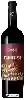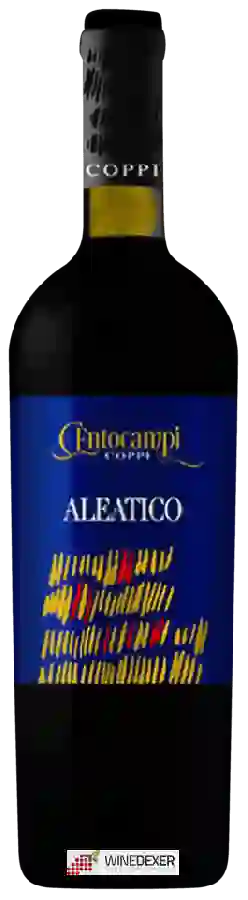
Winery CentocampiAleatico
 Red wine



In the mouth this red wine is a powerful.
This wine generally goes well with beef, game (deer, venison) or lamb.

Taste structure of the Aleatico from the Winery Centocampi
Light | Bold | |
Smooth | Tannic | |
Dry | Sweet | |
Soft | Acidic |
In the mouth the Aleatico of Winery Centocampi in the region of Puglia is a powerful.
Food and wine pairings with Aleatico
Pairings that work perfectly with Aleatico



Original food and wine pairings with Aleatico

The Aleatico of Winery Centocampi matches generally quite well with dishes of beef, pasta or lamb such as recipes of homemade beef stew, pasta bolognese or lamb tagine with apricots (morocco).
Details and technical informations about Winery Centocampi's Aleatico.
Discover the grape variety: Aléatico
Aromatic, sweet reds with a light ruby robe, fine tannins and a luscious palate. Intense, refined aromas of rose, wild strawberry, raspberry, candied cherry, delicate muscat and soft spices. Often vinified as passito, sweet or fortified by drying; rarely as dry reds. Star of Elba Aleatico Passito DOCG and Aleatico di Gradoli DOC in Lazio, also present in Puglia. Native Italian variety, related to Muscat Blanc à Petits Grains.
Last vintages of this wine
The best vintages of Aleatico from Winery Centocampi are 0, 2012
Informations about the Winery Centocampi
The Winery Centocampi is one of of the world's greatest estates. It offers 7 wines for sale in the of Puglia to come and discover on site or to buy online.

The wine region of Puglia
Heel of the boot, 80% red vineyard, sunny and generous. Fleshy, jammy Primitivo (= Zinfandel) with notes of black cherry, plum, chocolate and spices, powerful alcohol and melted tannins, a star in Primitivo di Manduria. Deep, structured Negroamaro (black-bitter) with a bitter finish in Salice Salentino. Structured Nero di Troia, spicy Susumaniello.
The word of the wine: Basic wine
Dry, still wine intended for the production of sparkling wines (champagne, crémants, etc.). The basic wines undergo a second fermentation in the bottle for the production of carbon dioxide, and therefore of bubbles.