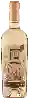
Winery CavatinaPinot Grigio Rosé
 Pink wine
This wine generally goes well with vegetarian, shellfish or mushrooms.
Food and wine pairings with Pinot Grigio Rosé
Pairings that work perfectly with Pinot Grigio Rosé



Original food and wine pairings with Pinot Grigio Rosé

The Pinot Grigio Rosé of Winery Cavatina matches generally quite well with dishes of shellfish, vegetarian or mushrooms such as recipes of jambalaya (louisiana), nanie's diced ham quiche or homemade pizza crunch.
Details and technical informations about Winery Cavatina's Pinot Grigio Rosé.
Discover the grape variety: Malvoisie de l' Istrie
This grape variety is endemic to the Istrian peninsula, which is partly located in Italy, Slovenia and Croatia, where it is the leading white grape variety. In France, it is almost unknown. It is related to malvasia bianca longa, also known as malvasia del Chianti.
Informations about the Winery Cavatina
The Winery Cavatina is one of of the world's great estates. It offers 47 wines for sale in the of delle Venezie to come and discover on site or to buy online.

The wine region of delle Venezie
The wine region of delle Venezie is located in the region of Vénétie of Italy. We currently count 1204 estates and châteaux in the of delle Venezie, producing 2235 different wines in conventional, organic and biodynamic agriculture. The wines of delle Venezie go well with generally quite well with dishes .
The wine region of Veneto
Veneto is an important and growing wine region in northeastern Italy. Veneto is administratively Part of the Triveneto area, aLong with its smaller neighbors, Trentino-Alto Adige and Friuli-Venezia Giulia. In terms of geography, culture and wine styles, it represents a transition from the Alpine and Germanic-Slavic end of Italy to the warmer, drier, more Roman lands to the South. Veneto is slightly smaller than the other major Italian wine regions - Piedmont, Tuscany, Lombardy, Puglia and Sicily - but it produces more wine than any of them.
The word of the wine: Rootstock
American vine on which a French vine is grafted. This is the consequence of the phylloxera that destroyed the vineyard at the end of the 19th century: after much trial and error, it was discovered that the "pest" spared the roots of the American vines, and the technique became widespread.