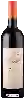
Winery Catherine LucasLa Peyrere du Tertre
 Red wine
This wine is a blend of 2 varietals which are the Cabernet-Sauvignon and the Merlot.
This wine generally goes well with poultry, beef or veal.

Food and wine pairings with La Peyrere du Tertre
Pairings that work perfectly with La Peyrere du Tertre



Original food and wine pairings with La Peyrere du Tertre

The La Peyrere du Tertre of Winery Catherine Lucas matches generally quite well with dishes of beef, veal or game (deer, venison) such as recipes of boles de picolat (catalan meatballs), veal paupiettes with cider or blood duck (tour d'argent).
Details and technical informations about Winery Catherine Lucas's La Peyrere du Tertre.
Discover the grape variety: Cabernet-Sauvignon
Structured, tannic reds, deeply coloured, with aromas of blackcurrant, blackberry, cedar, tobacco and graphite, underpinned by firm acidity and fine ageing potential. Cornerstone of the great Médoc estates (Pauillac, Saint-Estèphe, Saint-Julien) and signature of Napa Valley, Coonawarra and Maipo. The world's most planted red variety, a natural cross of Cabernet Franc x Sauvignon Blanc born in Bordeaux.
Last vintages of this wine



The best vintages of La Peyrere du Tertre from Winery Catherine Lucas are 0
Informations about the Winery Catherine Lucas
The Winery Catherine Lucas is one of of the world's greatest estates. It offers 11 wines for sale in the of Bordeaux Supérieur to come and discover on site or to buy online.

The wine region of Bordeaux Supérieur
Quality expression of generic Bordeaux: more concentrated, structured reds suited to 3-7 years' ageing, dominated by round Merlot (plum, black fruits), with firm Cabernet Sauvignon (blackcurrant, cedar), Cabernet Franc and Petit Verdot for the tannic frame. Stricter rules: higher planting density, limited yields, higher alcohol, longer ageing (often 12 months). Across the whole Gironde. Affordable yet serious Bordeaux, perfect at the table.
The wine region of Bordeaux
World-renowned age-worthy reds, led by round Merlot (plum, black fruit) or firm Cabernet Sauvignon (blackcurrant, cedar, graphite), blended with Cabernet Franc and Petit Verdot for tannic structure. Structured Médoc and Graves, velvety Saint-Émilion and Pomerol. Also crisp dry whites (Sauvignon/Sémillon) and opulent sweet Sauternes with honey and candied fruit. A 110,000 ha Gironde vineyard, 65 appellations, cradle of the 1855 classified growths.
The word of the wine: Oenologist
Specialist in wine-making techniques. It is a profession and not a passion: one can be an oenophile without being an oenologist (and the opposite too!). Formerly attached to the Faculty of Pharmacy, oenology studies have become independent and have their own university course. Learning to make wine requires a good chemical background but also, increasingly, a good knowledge of the plant. Some oenologists work in laboratories (analysis). Others, the consulting oenologists, work directly in the properties.