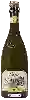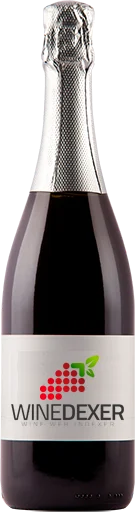
Winery CasaliFeudi del Boiardo Colli di Scandiano e Canossa Bianco Classico Dolce Frizzante
 Sparkling wine


This wine generally goes well with
Details and technical informations about Winery Casali's Feudi del Boiardo Colli di Scandiano e Canossa Bianco Classico Dolce Frizzante.
Discover the grape variety: Oberlin noir
Interspecific crossing between riparia Millardet and gamay obtained by Philip Christian Oberlin (1831-1915) who also created in 1897 the Oberlin Viticultural Institute in Colmar (Haut Rhin). This direct-producing hybrid was widely multiplied in the northeast region of France, from Alsace to Burgundy, also in the Loire Valley and in the Centre where our photographs were taken. Today, Oberlin noir is practically no longer cultivated, but a few vines exist here and there, producing very pleasant, albeit atypical, wines. It is nevertheless registered in the Official Catalogue of Vine Varieties, list A1. - Synonymy: 595 Oberlin (for all the synonyms of the grape varieties, click here!).
Last vintages of this wine
The best vintages of Feudi del Boiardo Colli di Scandiano e Canossa Bianco Classico Dolce Frizzante from Winery Casali are 2015, 0
Informations about the Winery Casali
The Winery Casali is one of of the world's greatest estates. It offers 43 wines for sale in the of Colli de Scandiano e Canosa to come and discover on site or to buy online.

The wine region of Colli de Scandiano e Canosa
The wine region of Colli de Scandiano e Canosa is located in the region of Émilie-Romagne of Italy. Wineries and vineyards like the Domaine Cantina Puianello or the Domaine Cantina Puianello produce mainly wines sparkling, red and white. The most planted grape varieties in the region of Colli de Scandiano e Canosa are Cabernet-Sauvignon, Marzemino and Merlot, they are then used in wines in blends or as a single variety. On the nose of Colli de Scandiano e Canosa often reveals types of flavors of vegetal, tree fruit or earth and sometimes also flavors of black fruit, dried fruit.
The wine region of Emilia-Romagna
Romagna/emilia">Emilia-Romagna is a Rich and fertile region in Northern Italy, and one of the country's most prolific wine-producing regions, with over 58,000 hectares (143,320 acres) of vines in 2010. It is 240 kilometers (150 miles) wide and stretches across almost the entire northern Italian peninsula, sandwiched between Tuscany to the South, Lombardy and Veneto to the north and the Adriatic Sea to the east. Nine miles of Liguria is all that separates Emilia-Romagna from the Ligurian Sea, and its uniqueness as the only Italian region with both an east and west coast. Emilia-Romagna's wine-growing heritage dates back to the seventh century BC, making it one of the oldest wine-growing regions in Italy.
The word of the wine: Salmanazar
Bottle with a capacity of 9 litres.