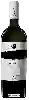
Winery Casale MilliTre Pecorino
 White wine



In the mouth this white wine is a powerful with a nice freshness.
This wine generally goes well with vegetarian, appetizers and snacks or lean fish.
Taste structure of the Tre Pecorino from the Winery Casale Milli
Light | Bold | |
Dry | Sweet | |
Soft | Acidic |
In the mouth the Tre Pecorino of Winery Casale Milli in the region of Abruzzo is a powerful with a nice freshness.
Food and wine pairings with Tre Pecorino
Pairings that work perfectly with Tre Pecorino



Original food and wine pairings with Tre Pecorino


The Tre Pecorino of Winery Casale Milli matches generally quite well with dishes of pasta, vegetarian or appetizers and snacks such as recipes of salmon and spinach lasagna, broccoli and blue cheese quiche without pastry or lupine seeds for kemia (the aperitif).
Details and technical informations about Winery Casale Milli's Tre Pecorino.
Discover the grape variety: Pecorino
A very old vine cultivated in Italy and very well known in particular in the Marche and Abruzzo regions, a trace of it has been found as far back as the second century B.C. where it is stated that it would have its first origins in Greece... almost unknown in France.
Last vintages of this wine
The best vintages of Tre Pecorino from Winery Casale Milli are 2019, 0
Informations about the Winery Casale Milli
The Winery Casale Milli is one of of the world's greatest estates. It offers 15 wines for sale in the of Abruzzo to come and discover on site or to buy online.

The wine region of Abruzzo
Abruzzo is an Italian wine region located on the eastern (Adriatic) coast. Its immediate neighbors in CentralItaly are Marche to the North, Lazio to the west and southwest and Molise to the southeast. Abruzzo has one DOCG - Montepulciano d'Abruzzo Colline Teramane - and three DOC wine appellations. The reds and Cerasuolo d'Abruzzo and Montepulciano d'Abruzzo, as well as the white wine appellation Trebbiano d'Abruzzo are the most notable, followed by the lesser-known Controguerra.
The word of the wine: Wine library
Cellar in which are kept bottles that retrace the history of a domain, a vintage, an exceptional wine, etc., and which constitute a collection. It is also said of a place that offers a very wide choice of wines served by the glass. The oenotheques are more and more widespread in the living rooms opened to the public.