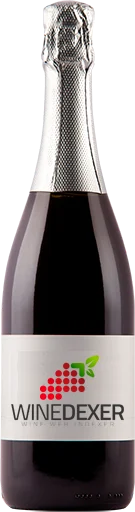
Winery Casa BennaMalvasia Dolce Colli Piacentini
 Sparkling wine
This wine generally goes well with
Details and technical informations about Winery Casa Benna's Malvasia Dolce Colli Piacentini.
Discover the grape variety: Calitor
Calitor is a black grape variety of Provençal origin that is not widely grown in France. It is only cultivated on a little more than a hundred hectares in total. The main characteristic of this variety is its bent stalk. Its adult leaves have 5 lobes and angular teeth. The leaf blade is both pubescent and downy. The young leaves have a pinkish tinge, especially in autumn. They are also downy. The tip of the calitor branch is cottony. Calitor is a recommended grape variety in the departments of Vaucluse and Var and is authorized in others such as Gard, Drôme and Ardèche. It has two variants, namely the grey calitor and the white calitor. The calitor is matured only 35 days after the chasselas but it is very productive. It appreciates hot and dry soils. This variety is resistant to oidium, but it remains sensitive to grey rot and mildew. Calitor produces a light, low-alcohol wine with little colour.
Informations about the Winery Casa Benna
The Winery Casa Benna is one of of the world's great estates. It offers 16 wines for sale in the of Colli Piacentini to come and discover on site or to buy online.

The wine region of Colli Piacentini
The wine region of Colli Piacentini is located in the region of Émilie-Romagne of Italy. Wineries and vineyards like the Domaine Marcus Aurelius or the Domaine Luretta produce mainly wines sparkling, red and white. The most planted grape varieties in the region of Colli Piacentini are Cabernet-Sauvignon, Chardonnay and Marsanne, they are then used in wines in blends or as a single variety. On the nose of Colli Piacentini often reveals types of flavors of oaky, tree fruit or vegetal and sometimes also flavors of lychee, mango or orange.
The wine region of Emilia-Romagna
Romagna/emilia">Emilia-Romagna is a Rich and fertile region in Northern Italy, and one of the country's most prolific wine-producing regions, with over 58,000 hectares (143,320 acres) of vines in 2010. It is 240 kilometers (150 miles) wide and stretches across almost the entire northern Italian peninsula, sandwiched between Tuscany to the South, Lombardy and Veneto to the north and the Adriatic Sea to the east. Nine miles of Liguria is all that separates Emilia-Romagna from the Ligurian Sea, and its uniqueness as the only Italian region with both an east and west coast. Emilia-Romagna's wine-growing heritage dates back to the seventh century BC, making it one of the oldest wine-growing regions in Italy.
The word of the wine: Sparkling
Equivalent to effervescent, this term is used among others to designate the "natural sparkling wines" produced in the Montlouis appellation.