The Winery Cap de Coste of Côtes de Gascogne of Comté Tolosan
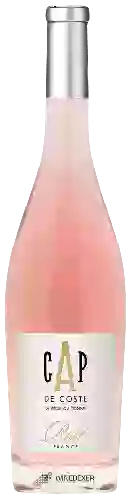
The Winery Cap de Coste is one of the best wineries to follow in Côtes de Gascogne.. It offers 4 wines for sale in of Côtes de Gascogne to come and discover on site or to buy online.
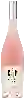
Looking for the best Winery Cap de Coste wines in Côtes de Gascogne among all the wines in the region? Check out our tops of the best red, white or effervescent Winery Cap de Coste wines. Also find some food and wine pairings that may be suitable with the wines from this area. Learn more about the region and the Winery Cap de Coste wines with technical and enological descriptions.
How Winery Cap de Coste wines pair with each other generally quite well with dishes of pasta, vegetarian or appetizers and snacks such as recipes of vegetarian lasagna, quiche with bacon and gruyère cheese or beetroot chips.
On the nose the pink wine of Winery Cap de Coste. often reveals types of flavors of raspberry, red fruit. In the mouth the pink wine of Winery Cap de Coste. is a with a nice freshness.
The wine region of Côtes de Gascogne is located in the region of Comté Tolosan of Vin de Pays of France. Wineries and vineyards like the Domaine Sichel or the Domaine Haut-Marin produce mainly wines white, red and sweet. The most planted grape varieties in the region of Côtes de Gascogne are Colombard, Gros Manseng and Merlot, they are then used in wines in blends or as a single variety. On the nose of Côtes de Gascogne often reveals types of flavors of red fruit, tangerine or jam and sometimes also flavors of watermelon, pomegranate or lemon grass.
In the mouth of Côtes de Gascogne is a powerful with a nice freshness. We currently count 483 estates and châteaux in the of Côtes de Gascogne, producing 1602 different wines in conventional, organic and biodynamic agriculture. The wines of Côtes de Gascogne go well with generally quite well with dishes of rich fish (salmon, tuna etc), shellfish or vegetarian.
How Winery Cap de Coste wines pair with each other generally quite well with dishes of rich fish (salmon, tuna etc), shellfish or vegetarian such as recipes of salmon koulibiac, pageot or leek, goat cheese and bacon quiche.
Colombard is one of the oldest grape varieties in the Charentes. This golden white grape variety is a cross between Chenin and Gouais. The young leaves of colombard are yellow with bronze patches. The adult leaves may be three-lobed or whole, depending on the variety. Its branches are cottony. The bunches of this variety are thick and cylindrical. Its elliptical berries are medium-sized. They change color until they ripen, ranging from greenish white to golden yellow. Colombard is associated with an average budding. It is particularly susceptible to leafhoppers, grape worms, mites, mildew, powdery mildew and gray mold. It is also sensitive to water stress, but is not very sensitive to wind. It ripens late in the second half of the year. There are a dozen approved clones of Colombard, the best known of which are 608, 607 and 606. This variety produces a full-bodied, fine white wine. Aromas of lime, nectarine, boxwood, citrus and exotic fruits are released.
How Winery Cap de Coste wines pair with each other generally quite well with dishes of beef, pasta or veal such as recipes of southern beef meatballs, pasta cake or sauté of veal with olives (corsica).
Close to the sensation of unctuousness, said of a wine that gives the impression of having the consistency of a syrup.
Planning a wine route in the of Côtes de Gascogne? Here are the wineries to visit and the winemakers to meet during your trip in search of wines similar to Winery Cap de Coste.
Merlot noir is a grape variety that originated in France (Bordeaux). It produces a variety of grape specially used for wine making. It is rare to find this grape to eat on our tables. This variety of grape is characterized by small to medium sized bunches, and medium sized grapes. Merlot noir can be found in many vineyards: South West, Languedoc & Roussillon, Cognac, Bordeaux, Loire Valley, Armagnac, Burgundy, Jura, Champagne, Rhone Valley, Beaujolais, Provence & Corsica, Savoie & Bugey.