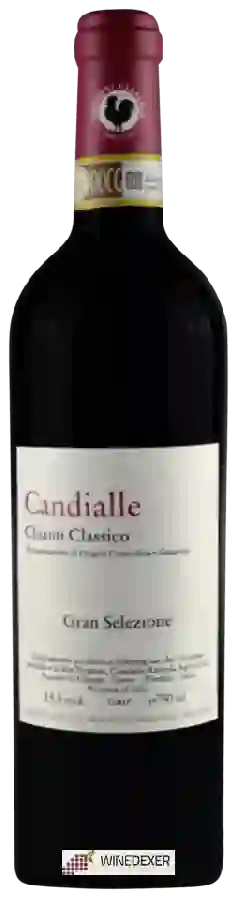
Winery CandialleGran Selezione Chianti Classico
 wine
wine
This wine generally goes well with
The Gran Selezione Chianti Classico of the Winery Candialle is in the top 0 of wines of Chianti Classico.

Details and technical informations about Winery Candialle's Gran Selezione Chianti Classico.
Discover the grape variety: Merzling
Aromatic, fresh whites with a pale golden robe, a supple palate and preserved acidity, with signature aromas of exotic fruits (pineapple, mango), white flowers (elderflower, acacia), citrus and muscat notes. Modern profile, best drunk young. Disease-resistant hybrid grape, a driver of organic viticulture in central Europe and parent of Bronner. German white hybrid created in 1960 in Freiburg (Seyve-Villard × (Riesling × Pinot Gris)).
Last vintages of this wine


The best vintages of Gran Selezione Chianti Classico from Winery Candialle are 0
Informations about the Winery Candialle
The Winery Candialle is one of of the world's greatest estates. It offers 13 wines for sale in the of Chianti Classico to come and discover on site or to buy online.

The wine region of Chianti Classico
Historic heart of Tuscan Chianti: signature Sangiovese as red king (≥80%) — ruby with garnet glints, elegant and complex with notes of ripe cherry, raspberry, plum, violet, leather and a balsamic touch with ageing, silky tannins and a saline mineral finish. Canaiolo, Colorino or Cabernet/Merlot possible as complements. Riserva and Gran Selezione at the summit. DOCG between Florence and Siena, galestro and alberese soils, continental climate — racy, age-worthy wines.
The wine region of Tuscany
Kingdom of Sangiovese: upright reds with cherry, plum, dried herbs and leather, lively acidity and firm tannins. Fleshy, food-friendly Chianti Classico DOCG, deep long-ageing Brunello di Montalcino (spice, tobacco, ripe black fruit), elegant Vino Nobile di Montepulciano. On the coast, Bolgheri crafts the opulent Cabernet- and Merlot-based 'Super Tuscans'. Some fresh white Vernaccia.
The word of the wine: Lies
A deposit formed by dead yeast after fermentation. Some white wines are aged on their lees, which makes their aromas and structure more complex and richer.





