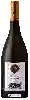
Winery CamperoShiraz
 Red wine



In the mouth this red wine is a powerful with a lot of tannins present in the mouth.
This wine generally goes well with poultry, beef or game (deer, venison).
Taste structure of the Shiraz from the Winery Campero
Light | Bold | |
Smooth | Tannic | |
Dry | Sweet | |
Soft | Acidic |
In the mouth the Shiraz of Winery Campero in the region of Central Valley is a powerful with a lot of tannins present in the mouth.
Food and wine pairings with Shiraz
Pairings that work perfectly with Shiraz



Original food and wine pairings with Shiraz

The Shiraz of Winery Campero matches generally quite well with dishes of beef, lamb or game (deer, venison) such as recipes of american style beef marinade, lamb stew with yoghurt and coriander or aiguillettes of duck with auvergne blue cheese.
Details and technical informations about Winery Campero's Shiraz.
Discover the grape variety: Petit Manseng
Petit Manseng is a white grape variety of Pyrenean origin. Its small berries have a hard, well-ventilated skin, which allows Petit Manseng to resist grey rot. On the other hand, this variety is very sensitive to noble rot, which concentrates the aromas and makes it possible to produce remarkable sweet wines with flavours of exotic fruits, grapefruit, honey, gingerbread, etc. Rich in alcohol and acidity, these wines are very well balanced and very fine. petit manseng also produces fruity dry white wines. It is also used in the AOC Béarn, Jurançon, Pacherenc-du-Vic-Bilh, Tursan...
Last vintages of this wine
The best vintages of Shiraz from Winery Campero are 0
Informations about the Winery Campero
The Winery Campero is one of of the world's greatest estates. It offers 17 wines for sale in the of Central Valley to come and discover on site or to buy online.

The wine region of Central Valley
The Central Valley (El Valle Central) of Chile is one of the most important wine-producing areas in South America in terms of Volume. It is also one of the largest wine regions, stretching from the Maipo Valley (just south of Santiago) to the southern end of the Maule Valley. This is a distance of almost 250 miles (400km) and covers a number of Climate types. The Central Valley wine region is easily (and often) confused with the geological Central Valley, which runs north–south for more than 620 miles (1000km) between the Pacific Coastal Ranges and the lower Andes.
The word of the wine: Skinny
Thin and lacking in substance in the mouth.