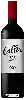
Winery CalliaSweet Rosé
 Sparkling wine


This wine generally goes well with beef, lamb or mature and hard cheese.
Food and wine pairings with Sweet Rosé
Pairings that work perfectly with Sweet Rosé



Original food and wine pairings with Sweet Rosé

The Sweet Rosé of Winery Callia matches generally quite well with dishes of beef, lamb or spicy food such as recipes of navarin of the sea da gigi, lamb and coconut curry, african style or tripe in the style of caen.
Details and technical informations about Winery Callia's Sweet Rosé.
Discover the grape variety: Seibel 6468
Direct producer hybrid obtained by Albert Seibel (1844/1936), interbreeding between 4614 Seibel and 3011 Seibel. The 6468 Seibel was not multiplied very much, today it is not present in the vineyard anymore. It should be noted that it has been used in many other crosses to obtain, among others, the Villard blanc, the date tree of Saint Vallier, etc.
Last vintages of this wine

The best vintages of Sweet Rosé from Winery Callia are 2014, 0
Informations about the Winery Callia
The Winery Callia is one of of the world's great estates. It offers 102 wines for sale in the of Tulum Valley to come and discover on site or to buy online.

The wine region of Tulum Valley
Tulum Valley is a wine-growing sub-region of San Juan, Argentina. Vineyards surround the city of San Juan in the east of the province of the same name at the foot of the Andes Mountains. Syrah is fast becoming the region's flagship Grape variety, producing Dense, peppery red wines with Rich fruit characters. High quality red and white wines are also being produced in the region from grape varieties such as Malbec, Chardonnay and Viognier.
The wine region of San Juan
San Juan is an important Argentinean wine-producing area, producing wines of increasing quality using traditional European Grape varieties. The wine region of San Juan covers the administrative area of the same name in the north-western corner of Argentina. The province sits between Mendoza and La Rioja, and is almost entirely contained within the mountainous foothills of the Andes. In terms of production Volume, San Juan is Argentina's second-largest wine region after Mendoza.
The word of the wine: Botrytis
Fungus that causes grape rot.