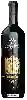
Château BouildeBordeaux Supérieur
 Other wine
This wine generally goes well with poultry, beef or veal.
Food and wine pairings with Bordeaux Supérieur
Pairings that work perfectly with Bordeaux Supérieur



Original food and wine pairings with Bordeaux Supérieur

The Bordeaux Supérieur of Château Bouilde matches generally quite well with dishes of beef, veal or game (deer, venison) such as recipes of small stuffed fish from nice, veal paupiettes with forestry sauce or cassoulet of yesteryear.
Details and technical informations about Château Bouilde's Bordeaux Supérieur.
Discover the grape variety: Millot Léon
Interspecific crossing between the 101-14 Millardet and Grasset (vitis riparia X vitis rupestris) and the goldriesling obtained by Eugène Kühlmann (1858-1932) around 1911 and marketed around 1921. With these same parents, he obtained among others the Maréchal Foch. Léon Millot is still found in Canada, the United States, Switzerland, Germany, Belgium, Denmark, Sweden, the Netherlands, Poland and England. In France, where it was grown for a long time in Alsace, it is no longer grown in the vineyards, although it is listed in the Official Catalogue of Vine Varieties, list A.
Informations about the Château Bouilde
The Château Bouilde is one of of the world's greatest estates. It offers 1 wines for sale in the of Bordeaux to come and discover on site or to buy online.

The wine region of Bordeaux
Bordeaux, in southwestern France, is one of the most famous, prestigious and prolific wine regions in the world. The majority of Bordeaux wines (nearly 90% of the production Volume) are the Dry, medium and Full-bodied red Bordeaux blends for which it is famous. The finest (and most expensive) are the wines of the great châteaux of Haut-Médoc and the right bank appellations of Saint-Émilion and Pomerol. The former focuses (at the highest level) on Cabernet Sauvignon, the latter on Merlot.
The word of the wine: Bâtonnage
A very old technique that has come back into fashion in modern oenology, which consists of shaking the white wine in the barrels at the end of fermentation, or after fermentation, with a stick or a flail, in order to suspend the fine lees composed of yeasts at the end of their activity. This process is sometimes used for red wines.