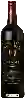
Maison BoueyChâteau des Ducs Bordeaux
 Red wine



In the mouth this red wine is a powerful with a nice balance between acidity and tannins.
This wine generally goes well with poultry, beef or veal.

Taste structure of the Château des Ducs Bordeaux from the Maison Bouey
Light | Bold | |
Smooth | Tannic | |
Dry | Sweet | |
Soft | Acidic |
In the mouth the Château des Ducs Bordeaux of Maison Bouey in the region of Bordeaux is a powerful with a nice balance between acidity and tannins.
Food and wine pairings with Château des Ducs Bordeaux
Pairings that work perfectly with Château des Ducs Bordeaux



Original food and wine pairings with Château des Ducs Bordeaux

The Château des Ducs Bordeaux of Maison Bouey matches generally quite well with dishes of beef, veal or game (deer, venison) such as recipes of american fillet (belgian-style beef tartar), pork tenderloin with onions or duck breast with orange sauce.
Details and technical informations about Maison Bouey's Château des Ducs Bordeaux.
Discover the grape variety: Merlot
Round and fleshy reds with a velvety texture, showing aromas of ripe plum, black cherry, cocoa and truffle notes with age. Supple tannins, generous alcohol, indulgent finish. Pillar of Libournais (Pomerol with Pétrus, Saint-Émilion with Cheval Blanc and Ausone) and signature of Super Tuscans, Italian Wales and Washington State. A cross of Cabernet Franc × Magdeleine Noire, France's most planted red variety.
Last vintages of this wine
The best vintages of Château des Ducs Bordeaux from Maison Bouey are 2011
Informations about the Maison Bouey
The Maison Bouey is one of of the world's great estates. It offers 509 wines for sale in the of Bordeaux to come and discover on site or to buy online.

The wine region of Bordeaux
World-renowned age-worthy reds, led by round Merlot (plum, black fruit) or firm Cabernet Sauvignon (blackcurrant, cedar, graphite), blended with Cabernet Franc and Petit Verdot for tannic structure. Structured Médoc and Graves, velvety Saint-Émilion and Pomerol. Also crisp dry whites (Sauvignon/Sémillon) and opulent sweet Sauternes with honey and candied fruit. A 110,000 ha Gironde vineyard, 65 appellations, cradle of the 1855 classified growths.
The word of the wine: Deposit
Solid particles that can naturally coat the bottom of a bottle of wine. It is rather a guarantee that the wine has not been mistreated: in fact, to avoid the natural deposit, rather violent processes of filtration or cold passage (- 7 or - 8 °C) are used in order to precipitate the tartar (the small white crystals that some people confuse with crystallized sugar: just taste to dissuade you from it)