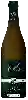
Winery BötzingerGrauer Burgunder Spätlese S Trocken
 White wine



In the mouth this white wine is a powerful.
This wine generally goes well with pork, cured meat or mushrooms.

Taste structure of the Grauer Burgunder Spätlese S Trocken from the Winery Bötzinger
Light | Bold | |
Dry | Sweet | |
Soft | Acidic |
In the mouth the Grauer Burgunder Spätlese S Trocken of Winery Bötzinger in the region of Baden is a powerful.
Food and wine pairings with Grauer Burgunder Spätlese S Trocken
Pairings that work perfectly with Grauer Burgunder Spätlese S Trocken



Original food and wine pairings with Grauer Burgunder Spätlese S Trocken

The Grauer Burgunder Spätlese S Trocken of Winery Bötzinger matches generally quite well with dishes of pork, spicy food or mushrooms such as recipes of white cabbage with bacon, rigatoni with courgettes and tomatoes or rabbit with green olives.
Details and technical informations about Winery Bötzinger's Grauer Burgunder Spätlese S Trocken.
Discover the grape variety: Italia Rubi
Table grape with long bunches and elongated red-violet berries, thin skin and muscat-flavoured flesh, sweet and aromatic taste. Rarely vinified. Grown for fresh consumption in Italy, Spain, the Maghreb and South America, appreciated for its attractive appearance and muscat flavour in mass retail. Italian black table grape variety, a red-violet skin mutation of the Italia grape.
Last vintages of this wine
The best vintages of Grauer Burgunder Spätlese S Trocken from Winery Bötzinger are 0
Informations about the Winery Bötzinger
The Winery Bötzinger is one of of the world's great estates. It offers 63 wines for sale in the of Baden to come and discover on site or to buy online.

The wine region of Baden
German capital of Pinot Noir (Spätburgunder): silky, fine reds with notes of red fruits, cherry, undergrowth and sweet spices, melted tannins. Round Grauburgunder (Pinot Gris), lively Weissburgunder, supple Müller-Thurgau, mineral Riesling. Germany's 3rd region (15,000 ha) in Baden-Württemberg facing Alsace, one of the country's warmest climates, volcanic soils at the Kaiserstuhl. Cradle of modern great German reds, elegant and fine.
The word of the wine: Performance
Quantity of grapes harvested per hectare. In AOC, the average yield is limited on the proposal of the appellation syndicate, validated by the Inao. The use of high-performance plant material (especially clones) and better control of vine diseases have increased yields. This is not without consequences on the quality of the wines (dilution) and on the state of the market (too much wine). We must not over-simplify: low yields are not synonymous with quality, and it is often in years with generous harvests that we find the greatest vintages (1982 and 1986 in Bordeaux, 1996 in Champagne, 1990 and 2005 in Burgundy...).