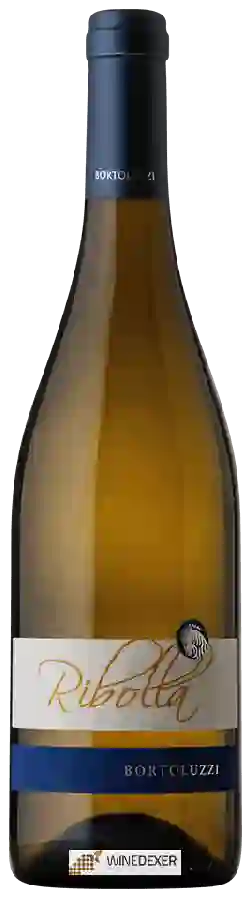
Winery BortoluzziRibolla
 White wine



In the mouth this white wine is a powerful with a nice freshness.
This wine generally goes well with lean fish, shellfish or mature and hard cheese.

Taste structure of the Ribolla from the Winery Bortoluzzi
Light | Bold | |
Dry | Sweet | |
Soft | Acidic |
In the mouth the Ribolla of Winery Bortoluzzi in the region of Friuli-Venezia Giulia is a powerful with a nice freshness.
Food and wine pairings with Ribolla
Pairings that work perfectly with Ribolla



Original food and wine pairings with Ribolla


The Ribolla of Winery Bortoluzzi matches generally quite well with dishes of pasta, shellfish or mature and hard cheese such as recipes of the real recipe for carbonara, indian chicken (simplified korma) or aveyron truffle.
Details and technical informations about Winery Bortoluzzi's Ribolla.
Discover the grape variety: Ribolla gialla
Lively, taut whites with firm acidity and a slender mouth, featuring aromas of citrus, green apple, white flowers, fresh herbs and chalky mineral notes. Often vinified with skin maceration (orange wine), developing amber hues of dried fruits, honey, tannins and oxidative complexity. Signature of great Friulian whites (Collio DOC, Colli Orientali del Friuli DOC) and Slovenia under the name Rebula (Brda). Native Friulian grape.
Last vintages of this wine
The best vintages of Ribolla from Winery Bortoluzzi are 0
Informations about the Winery Bortoluzzi
The Winery Bortoluzzi is one of of the world's greatest estates. It offers 19 wines for sale in the of Friuli-Venezia Giulia to come and discover on site or to buy online.

The wine region of Friuli-Venezia Giulia
Italian benchmark of great whites of elegance and minerality. Emblematic Friulano with notes of fresh almond, pear and white flowers, taut Ribolla Gialla, precise Pinot Grigio, lively Sauvignon and balanced Chardonnay. Rare sweet Picolit (DOCG), saline Malvasia Istriana. Rising reds: fruity spicy Refosco, more tannic Pignolo and Schioppettino.
The word of the wine: Tanin
A natural compound contained in the skin of the grape, the seed or the woody part of the bunch, the stalk. The maceration of red wines allows the extraction of tannins, which give the texture, the solidity and also the mellowness when the tannins are "ripe". The winemaker seeks above all to extract the tannins from the skin, the ripest and most noble. The tannins of the seed or stalk, which are "greener", especially in average years, give the wine hardness and astringency. The wines of Bordeaux (based on Cabernet and Merlot) are full of tannins, those of Burgundy much less so, with Pinot Noir containing little.