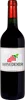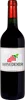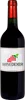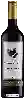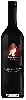
Winery BoomerangShiraz
 Red wine
In the mouth this red wine is a powerful with a lot of tannins present in the mouth.
This wine generally goes well with poultry, beef or game (deer, venison).
Taste structure of the Shiraz from the Winery Boomerang
Light | Bold | |
Smooth | Tannic | |
Dry | Sweet | |
Soft | Acidic |
In the mouth the Shiraz of Winery Boomerang in the region of Australie du Sud-Est is a powerful with a lot of tannins present in the mouth.
Food and wine pairings with Shiraz
Pairings that work perfectly with Shiraz



Original food and wine pairings with Shiraz

The Shiraz of Winery Boomerang matches generally quite well with dishes of beef, lamb or game (deer, venison) such as recipes of pork tongue with bacon and onions, lamb chops with spanish sauce or roast duck breast stuffed with foie gras confit.
Details and technical informations about Winery Boomerang's Shiraz.
Discover the grape variety: Beaunoir
A very old grape variety from the Aube department and the Châtillon sur Seine district in the Côte d'Or. It is said to be the descendant of a natural intraspecific crossing between pinot noir and gouais blanc. Today, it is almost absent in the vineyard.
Informations about the Winery Boomerang
The Winery Boomerang is one of of the world's greatest estates. It offers 2 wines for sale in the of Australie du Sud-Est to come and discover on site or to buy online.

The wine region of Australie du Sud-Est
South East Australia is a geographical indication (GI) covering the entire south-eastern third of Australia. The western boundary of this area extends 2,000 kilometres (1,250 miles) across the Australian continent from the Pacific coast of Queensland to the Southern Ocean coast of South Australia. This vast wine 'super zone' effectively encompasses all the major Australian wine regions outside Western Australia. Rainforest, mountain ranges, scrubland, desert and Dry riverbeds occupy the majority of the land in the South East Australian area.
The word of the wine: Chaptalization
The addition of sugar at the time of fermentation of the must, an ancient practice, but theorized by Jean-Antoine Chaptal at the dawn of the 19th century. The sugar is transformed into alcohol and allows the natural degree of the wine to be raised in a weak or cold year, or - more questionably - when the winegrower has a harvest that is too large to obtain good maturity.