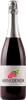
Winery Bonne ChanceMoscato Rosé
 Sparkling wine
In the mouth this sparkling wine is a with fine and regular bubbles.
This wine generally goes well with appetizers and snacks, lean fish or shellfish.
Taste structure of the Moscato Rosé from the Winery Bonne Chance
Light | Bold | |
Soft | Acidic | |
Gentle | Fizzy |
In the mouth the Moscato Rosé of Winery Bonne Chance in the region of Castille-et-Léon is a with fine and regular bubbles.
Food and wine pairings with Moscato Rosé
Pairings that work perfectly with Moscato Rosé



Original food and wine pairings with Moscato Rosé

The Moscato Rosé of Winery Bonne Chance matches generally quite well with dishes of shellfish, appetizers and snacks or lean fish such as recipes of chinese fried shrimp ravioli, tuna spread or saffron monkfish.
Details and technical informations about Winery Bonne Chance's Moscato Rosé.
Discover the grape variety: Mara
Intraspecific cross between gamay noir and reichensteiner obtained in 1970 by André Jacquinet at the Agroscope Changins-Wädenswil research station (Switzerland). From these same parents he also obtained the gamaret and the garanoir. It should not be confused with the Romanian direct producer hybrid, also black, resulting from an interspecific cross between 12 303 Seyve-Villard and ozana. Mara is mainly cultivated in Switzerland and is virtually unknown in France.
Informations about the Winery Bonne Chance
The Winery Bonne Chance is one of of the world's greatest estates. It offers 2 wines for sale in the of Castille-et-Léon to come and discover on site or to buy online.

The wine region of Castille-et-Léon
Located in the northern half of the Central Iberian plateau, Castilla y León is the largest of Spain's 17 administrative regions, covering about one-fifth of the country's total area. It extends about 350 kilometres (220 miles) from central Spain to the northern coast. Just as wide, it connects the Rioja wine region to the Portuguese border. Red wines reign supreme in Castilla y León, and the Tempranillo grape is undoubtedly the king.
The word of the wine: Animal
Generic smell of aromatic families reminiscent of fur, game, musk, civet, amber and sometimes unpleasant smells of wet hair. The old books on tasting give as an example of animal aroma the belly of hare.