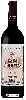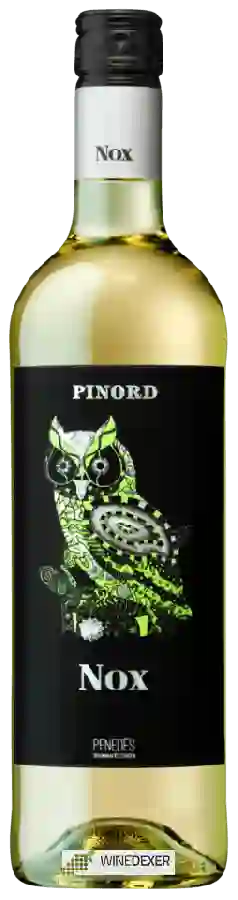
Winery PinordNox Penedès Blanco
 White wine


This wine generally goes well with

Details and technical informations about Winery Pinord's Nox Penedès Blanco.
Discover the grape variety: Amaral
Light, acidic reds best drunk young, with a sustained ruby robe, silky tannins and a lively palate showing fresh red fruits (cherry, raspberry), inky notes and a herbaceous hint. Crisp and refreshing. Often blended with Vinhão and Espadeiro, contributing to the bright profile of Vinho Verde tinto DOC. Native Portuguese black grape grown mainly in the Vinho Verde region of north-west Portugal.
Last vintages of this wine
The best vintages of Nox Penedès Blanco from Winery Pinord are 2017, 0, 2018
Informations about the Winery Pinord
The Winery Pinord is one of wineries to follow in Penedès.. It offers 175 wines for sale in the of Penedès to come and discover on site or to buy online.

The wine region of Penedès
Historic cradle of Cava (95% of Spanish output, centred on Sant Sadurní d'Anoia): traditional-method sparklers, convivial and brioche-like. Indigenous trilogy: signature Xarel-lo (body, herbaceous and almondy notes), Macabeo (apple, freshness), Parellada (floral elegance). Still wines ~80% white from the same grapes, straight and accessible. Also sunny Garnacha, Cabernet and Pinot Noir.
The wine region of Catalogne
Cradle of Cava (~95% of Spanish output, traditional method): Macabeo, Xarel-lo, Parellada trilogy, fine fruity bubble. Quality peak in Priorat DOCa: dense, mineral reds on llicorella (schist), old-vine Garnacha and Cariñena with black fruit, garrigue notes, firm tannins. Also Penedès, fleshy Montsant, sunny Empordà, Costers del Segre. Mediterranean.
The word of the wine: Anthocyanins
Phenolic compounds present in the skin of grapes that give colour to red wines during maceration.