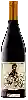
Winery Black Sheep FindsBirds Of Passage Rosé Of Refosco
 wine
wine
This wine generally goes well with
The Birds Of Passage Rosé Of Refosco of the Winery Black Sheep Finds is in the top 0 of wines of Santa Maria Valley.

Details and technical informations about Winery Black Sheep Finds's Birds Of Passage Rosé Of Refosco.
Discover the grape variety: Maréchal Joffre
Colourful, fruity reds to drink young with a sustained ruby robe, moderate tannins and an airy palate, and signature aromas of red and black fruits (cherry, blackberry) and simple notes. An accessible profile for cold climates. Grown mainly in Canada (Quebec, Ontario) and the northeastern United States, adapted to harsh continental vineyards. A black hybrid grape bred in Alsace in the early 20th century by Eugène Kuhlmann.
Informations about the Winery Black Sheep Finds
The Winery Black Sheep Finds is one of of the world's great estates. It offers 20 wines for sale in the of Santa Maria Valley to come and discover on site or to buy online.

The wine region of Santa Maria Valley
First AVA of Santa Barbara (1981) on an east-west valley swept by Pacific winds: signature Pinot Noir dominant as king red with herbaceous, savoury notes and lifted red fruits, fine acidity and silky tannins. Energetic Chardonnay with tropical and floral aromas, king whites (a third of production). Also Rhône Syrah and Viognier, confidential Grenache and Marsanne. Very cool climate over a long season, a Burgundian and northern-Rhône identity.
The wine region of California
Powerful, sunny reds: dense Napa Cabernet Sauvignon (blackcurrant, chocolate, tobacco, ample tannins), spicy, jammy Zinfandel from the Sierra Foothills, silky red-fruited Pinot Noir on the cool coast (Sonoma, Russian River, Central Coast). Opulent, buttery Chardonnay, notes of yellow fruit and vanilla. Varied climate, from the hot interior to the Pacific-cooled coast. 80% of US production, 139 AVAs including Napa (1st AVA, 1981).
The word of the wine: Astringency
Chemical stimulation that tightens the mucous membranes of the mouth and causes a sensation of harshness, which is characteristic of the presence of tannins. With time, the tannins lose their harshness and become softer.