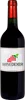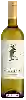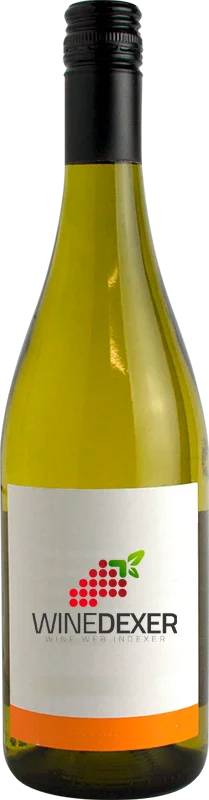
Winery BelcantePurement Sauvignon
 White wine
This wine generally goes well with vegetarian, poultry or lean fish.
Food and wine pairings with Purement Sauvignon
Pairings that work perfectly with Purement Sauvignon



Original food and wine pairings with Purement Sauvignon


The Purement Sauvignon of Winery Belcante matches generally quite well with dishes of pasta, vegetarian or poultry such as recipes of ricotta and spinach lasagna, quiche without pastry or jambalaya (louisiana).
Details and technical informations about Winery Belcante's Purement Sauvignon.
Discover the grape variety: Emerald seedless
Cross between the emperor and the Pirovano 75 or sultana moscata obtained in the United States by Professor Harold P. Olmo of the University of Davis (California). It can be found in Australia, Spain, Portugal, United States, ... almost unknown in France. It should not be confused with the emerald riesling also obtained by Harold P. Olmo and the black emerald seedless which as its name indicates is black.
Informations about the Winery Belcante
The Winery Belcante is one of of the world's greatest estates. It offers 4 wines for sale in the of Pays d'Oc to come and discover on site or to buy online.

The wine region of Pays d'Oc
Pays d'Oc is the PGI for red, white and rosé wines that are produced over a wide area of the southern coast of France. The PGI catchment area corresponds roughly to the Languedoc-roussillon">Languedoc-Roussillon wine region, one of the largest wine regions in France. The area covers all wines that are not produced under the strict laws that govern AOC-level appellations in the regions: among them, Corbières, Minervois and the Languedoc appellation itself. The Pays d'Oc PGI is arguably the most important in France, producing the majority of the country's PGI wines.
The word of the wine: Deposit
Solid particles that can naturally coat the bottom of a bottle of wine. It is rather a guarantee that the wine has not been mistreated: in fact, to avoid the natural deposit, rather violent processes of filtration or cold passage (- 7 or - 8 °C) are used in order to precipitate the tartar (the small white crystals that some people confuse with crystallized sugar: just taste to dissuade you from it)