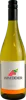
Winery BeisiegelSpätburgunder Trocken
 Red wine
In the mouth this red wine is a with a nice freshness.
This wine generally goes well with poultry, beef or veal.
Taste structure of the Spätburgunder Trocken from the Winery Beisiegel
Light | Bold | |
Smooth | Tannic | |
Dry | Sweet | |
Soft | Acidic |
In the mouth the Spätburgunder Trocken of Winery Beisiegel in the region of Nahe is a with a nice freshness.
Food and wine pairings with Spätburgunder Trocken
Pairings that work perfectly with Spätburgunder Trocken



Original food and wine pairings with Spätburgunder Trocken

The Spätburgunder Trocken of Winery Beisiegel matches generally quite well with dishes of beef, veal or game (deer, venison) such as recipes of provencal stew, vitello tonnato or duck pot au feu.
Details and technical informations about Winery Beisiegel's Spätburgunder Trocken.
Discover the grape variety: Baco noir
It is the only vinifera-riparia that has been commercialized. It is the result of crossing the folle blanche with the riparia grand glabre created in 1902 by François Baco. Depending on the region, we can still find some small plots of black Baco vines often mixed with other varieties. You will also find trellises or arbors installed a long time ago in front of old houses and still maintained in a more than remarkable way thanks to the great vigour of this variety. It should be noted that there is also a white baco resulting from the crossing of the folle blanche by the noah and resembling much the latter.
Informations about the Winery Beisiegel
The Winery Beisiegel is one of of the world's greatest estates. It offers 13 wines for sale in the of Nahe to come and discover on site or to buy online.

The wine region of Nahe
Nahe is one of the smaller German wine regions, named after the Nahe river which joins the Rhein at Rheinhessen/bingen">Bingen. The viticultural carea here is characterised by dramatic topography with steep slopes and craggy outcrops of metamorphic rock. Like most of the regions on or near the Rhine, its most prestigious wines are made from Riesling. There are around 4,000 hectares (10,000 acres) of Vineyards, spread across seven Grosslagen (wine districts) and over 300 Einzellagen (individual vineyard sites).
The word of the wine: Crunchy
A very colorful term to designate a sensation similar to the crunchiness of a grape bursting under the tooth in young and lively wines.