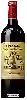
Château Béard La ChapelleLe Petit Louis Rouge Saint-Émilion Grand Cru
 Red wine
This wine generally goes well with poultry, beef or veal.
Food and wine pairings with Le Petit Louis Rouge Saint-Émilion Grand Cru
Pairings that work perfectly with Le Petit Louis Rouge Saint-Émilion Grand Cru



Original food and wine pairings with Le Petit Louis Rouge Saint-Émilion Grand Cru

The Le Petit Louis Rouge Saint-Émilion Grand Cru of Château Béard La Chapelle matches generally quite well with dishes of beef, lamb or game (deer, venison) such as recipes of roast beef with garlic, oriental lamb skewers or cassoulet of yesteryear.
Details and technical informations about Château Béard La Chapelle's Le Petit Louis Rouge Saint-Émilion Grand Cru.
Discover the grape variety: Albarino
It is a Spanish variety, in Galicia to be precise, with its cradle in the Rias Baixas area, around Pontevedra and up to Orense. It would be a close relative of the Loureiro. Widely cultivated in Portugal, ... in France, it is registered in the Official Catalogue of wine grape varieties, list A1.
Informations about the Château Béard La Chapelle
The Château Béard La Chapelle is one of of the world's greatest estates. It offers 2 wines for sale in the of Saint-Émilion Grand Cru to come and discover on site or to buy online.

The wine region of Saint-Émilion Grand Cru
The wine region of Saint-Émilion Grand Cru is located in the region of Saint-Émilion of Bordeaux of France. Wineries and vineyards like the Château Cheval Blanc or the Château Ausone produce mainly wines red. The most planted grape varieties in the region of Saint-Émilion Grand Cru are Merlot, Cabernet franc and Cabernet-Sauvignon, they are then used in wines in blends or as a single variety. On the nose of Saint-Émilion Grand Cru often reveals types of flavors of cherry, dill or tropical fruit and sometimes also flavors of aniseed, hay or honey.
The wine region of Bordeaux
Bordeaux, in southwestern France, is one of the most famous, prestigious and prolific wine regions in the world. The majority of Bordeaux wines (nearly 90% of the production Volume) are the Dry, medium and Full-bodied red Bordeaux blends for which it is famous. The finest (and most expensive) are the wines of the great châteaux of Haut-Médoc and the right bank appellations of Saint-Émilion and Pomerol. The former focuses (at the highest level) on Cabernet Sauvignon, the latter on Merlot.
The word of the wine: Attack
First impressions perceived after the wine is put in the mouth.