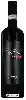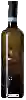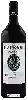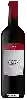
Winery Baronia di TaurasiaGreco Di Tufo
 Red wine
In the mouth this red wine is a powerful.
This wine generally goes well with beef, lamb or pasta.
Taste structure of the Greco Di Tufo from the Winery Baronia di Taurasia
Light | Bold | |
Smooth | Tannic | |
Dry | Sweet | |
Soft | Acidic |
In the mouth the Greco Di Tufo of Winery Baronia di Taurasia in the region of Campania is a powerful.
Food and wine pairings with Greco Di Tufo
Pairings that work perfectly with Greco Di Tufo



Original food and wine pairings with Greco Di Tufo
The Greco Di Tufo of Winery Baronia di Taurasia matches generally quite well with dishes of beef, pasta or lamb such as recipes of roast beef with caramelized onion, capellini with prosciutto or merguez - courgettes gratin (leftover barbecue).
Details and technical informations about Winery Baronia di Taurasia's Greco Di Tufo.
Discover the grape variety: Arbane
Arbane blanc is a grape variety that originated in France (Aube). It produces a variety of grape specially used for wine making. It is rare to find this grape to eat on our tables. Arbane blanc can be found in several vineyards: South-West, Cognac, Bordeaux, Champagne, Jura, Provence & Corsica, Rhone Valley.
Informations about the Winery Baronia di Taurasia
The Winery Baronia di Taurasia is one of of the world's greatest estates. It offers 2 wines for sale in the of Campania to come and discover on site or to buy online.

The wine region of Campania
Campania is a region that forms the "tibia" of the boot of Italy, and whose largest city is Naples. Its name comes from Campania felix, a Latin phrase meaning roughly "happy land". The region has strong historical links with wine and vineyards, dating back to the 12th century BC, and is one of the oldest wine regions in Italy. The considerable influence of ancient empires, including the Greeks, Romans and Byzantines, means that some of the varieties in this region are linked to historical legends.
The word of the wine: Draft liquor (champagne)
After blending, the wine is bottled with a liqueur de tirage (a mixture of sugar and wine) and a yeast (selected yeasts). The yeast attacks the sugar and creates carbon dioxide. The fermentation, which lasts about two months, is prolonged by an ageing period (15 months minimum in total). The bottle is capped (some rare vintages are capped with a staple and a cork).