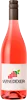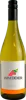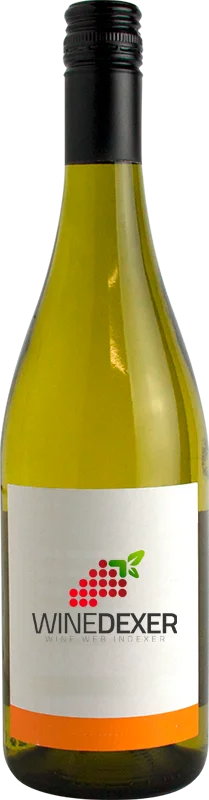
Winery Balázs HangyálHangyál Balázs Irsai Olivér Elemy
 White wine


This wine generally goes well with
The Hangyál Balázs Irsai Olivér Elemy of the Winery Balázs Hangyál is in the top 60 of wines of Pannonhalma.
Details and technical informations about Winery Balázs Hangyál's Hangyál Balázs Irsai Olivér Elemy.
Discover the grape variety: Mondeuse blanche
Haute-Savoie finds in Mondeuse blanche one of the oldest grape varieties planted in its vineyards. It can be found throughout Savoie and Ain, although its cultivation is not very well developed. Barely 5 hectares of vineyards are planted with this variety. It is known by other names such as savouette, dongine, couilleri or aigre blanc. Mondeuse blanche can be recognized by the downy appearance of its young shoots bearing very tan leaves, reminiscent of spider webs. The leaf blade tends to lose its tan appearance as it ages, while the 5 lobes are clearly defined. Mondeuse blanche produces bunches of grapes that give a wine with good acidity and a long shelf life, which can be kept for up to thirty years. They appear compact, cylindrical and winged. The juicy, sweet and crunchy berries ripen in the second late season. The golden yellow or green skin is quite strong, covering an ovoid or spherical fruit of medium size.
Last vintages of this wine
The best vintages of Hangyál Balázs Irsai Olivér Elemy from Winery Balázs Hangyál are 0
Informations about the Winery Balázs Hangyál
The Winery Balázs Hangyál is one of of the world's greatest estates. It offers 18 wines for sale in the of Pannonhalma to come and discover on site or to buy online.

The wine region of Pannonhalma
The wine region of Pannonhalma is located in the region of Észak-Dunántúl of Hungary. Wineries and vineyards like the Domaine Pannonhalmi Apátsági or the Domaine Pannonhalmi Apátsági produce mainly wines white, red and pink. The most planted grape varieties in the region of Pannonhalma are Merlot, Cabernet franc and Riesling, they are then used in wines in blends or as a single variety. On the nose of Pannonhalma often reveals types of flavors of non oak, earth or oak and sometimes also flavors of spices, red fruit or black fruit.
The wine region of Észak-Dunántúl
Hungary, in Central Europe, has gained its reputation in the wine world through just a couple of wine styles, but for centuries it has been a wine-producing nation of considerable diversity. In addition to the Sweet wines of Tokaj and the Deep Bull's Blood of Eger, the Hungarian wine portfolio includes Dry whites from the shores of Lake Balaton, Somló and Neszmély, and finer reds from various regions, notably Villány, Sopron and Szekszard. Hungarian wine culture stretches back to Roman times and has survived numerous political, religious and economic challenges, including Islamic rule during the 16th Century (when Alcohol was prohibited) and the Phylloxera epidemic of the late 1800s. The modern Hungarian wine regions are distributed around the country.
The word of the wine: Véraison
A phase in the vegetative cycle of the vine that takes place in summer, usually in August, when the grapes change colour from green to red (for reds) or yellow (for whites). This stage heralds the beginning of ripening.