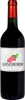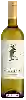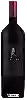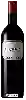
Winery Badet ClementGrenache
 Red wine



In the mouth this red wine is a powerful with a nice balance between acidity and tannins.
This wine generally goes well with beef, veal or pasta.
Taste structure of the Grenache from the Winery Badet Clement
Light | Bold | |
Smooth | Tannic | |
Dry | Sweet | |
Soft | Acidic |
In the mouth the Grenache of Winery Badet Clement in the region of Pays d'Oc is a powerful with a nice balance between acidity and tannins.
Food and wine pairings with Grenache
Pairings that work perfectly with Grenache



Original food and wine pairings with Grenache
The Grenache of Winery Badet Clement matches generally quite well with dishes of beef, pasta or veal such as recipes of chicken, beef and lamb couscous (morocco), chicken wok with chinese noodles or pork chops with veal stock sauce.
Details and technical informations about Winery Badet Clement's Grenache.
Discover the grape variety: Soreli
Interspecific cross between sauvignonasse and kozma 20-3 obtained in 2002 at the University and Institute of Applied Genetics of Udine (Italy), which is also the case for fleurtai. Two genes for resistance to mildew could be identified, no gene for powdery mildew.
Last vintages of this wine
The best vintages of Grenache from Winery Badet Clement are 2016, 2015
Informations about the Winery Badet Clement
The Winery Badet Clement is one of of the world's great estates. It offers 111 wines for sale in the of Pays d'Oc to come and discover on site or to buy online.

The wine region of Pays d'Oc
Pays d'Oc is the PGI for red, white and rosé wines that are produced over a wide area of the southern coast of France. The PGI catchment area corresponds roughly to the Languedoc-roussillon">Languedoc-Roussillon wine region, one of the largest wine regions in France. The area covers all wines that are not produced under the strict laws that govern AOC-level appellations in the regions: among them, Corbières, Minervois and the Languedoc appellation itself. The Pays d'Oc PGI is arguably the most important in France, producing the majority of the country's PGI wines.
The word of the wine: Deposit
Solid particles that can naturally coat the bottom of a bottle of wine. It is rather a guarantee that the wine has not been mistreated: in fact, to avoid the natural deposit, rather violent processes of filtration or cold passage (- 7 or - 8 °C) are used in order to precipitate the tartar (the small white crystals that some people confuse with crystallized sugar: just taste to dissuade you from it)