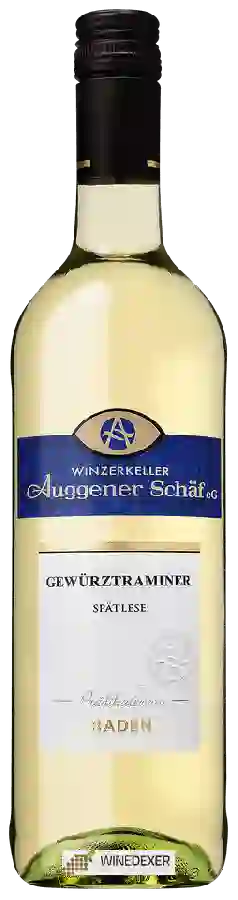
Winery Auggener SchäfGewürztraminer Spätlese
 White wine



In the mouth this white wine is a powerful.
This wine generally goes well with pork, poultry or rich fish (salmon, tuna etc).
Taste structure of the Gewürztraminer Spätlese from the Winery Auggener Schäf
Light | Bold | |
Dry | Sweet | |
Soft | Acidic |
In the mouth the Gewürztraminer Spätlese of Winery Auggener Schäf in the region of Baden is a powerful.
Food and wine pairings with Gewürztraminer Spätlese
Pairings that work perfectly with Gewürztraminer Spätlese



Original food and wine pairings with Gewürztraminer Spätlese


The Gewürztraminer Spätlese of Winery Auggener Schäf matches generally quite well with dishes of pork, rich fish (salmon, tuna etc) or spicy food such as recipes of homemade pork curry, salmon steaks with lentils or chicken leg with curry in the oven.
Details and technical informations about Winery Auggener Schäf's Gewürztraminer Spätlese.
Discover the grape variety: Gewurztraminer
Gewurztraminer rosé is a grape variety that originated in France. It produces a variety of grape specially used for wine making. It is rare to find this grape to eat on our tables. This variety of vine is characterized by small bunches and small grapes. Gewurztraminer rosé can be found in many vineyards: Alsace, Loire Valley, Languedoc & Roussillon, Jura, Champagne, Lorraine, Provence & Corsica, Rhone Valley, Savoie & Bugey, Beaujolais, South West.
Last vintages of this wine
The best vintages of Gewürztraminer Spätlese from Winery Auggener Schäf are 2012, 2015, 0, 2018 and 2016.
Informations about the Winery Auggener Schäf
The Winery Auggener Schäf is one of of the world's greatest estates. It offers 70 wines for sale in the of Baden to come and discover on site or to buy online.

The wine region of Baden
Baden is the southernmost of Germany's 13 official wine regions. It is also the warmest. Its relatively sunny, DryClimate permits the production of good-quality Spätburgunder (Pinot Noir) and ripe, relatively Full-bodied">Full-bodied examples of Grauburgunder (Pinot Gris) and Weissburgunder (Pinot Blanc). These are often made in oaked styles.
The word of the wine: Tartar (deposit)
White, chalky deposits that occur as a result of precipitation inside bottles and are often considered by consumers as a defect. They are in fact tartaric salts formed by tartaric acid, potassium and calcium naturally present in the wine. This deposit does not alter the quality of the wine and can be eliminated by a simple decanting.