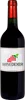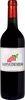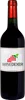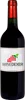
Winery ArmenianVayq Areni Dry Red
 Red wine
This wine generally goes well with
Details and technical informations about Winery Armenian's Vayq Areni Dry Red.
Discover the grape variety: Gros Colman
From the South Caucasus, perhaps in Georgia, some writings give it as coming from Russia, a country close to the previous one. For a long time, it was grown in greenhouses, particularly in Belgium, but also in England, France, Holland and Japan. It was rarely cultivated in the field, but a few attempts were made without much success on the banks of the Rhine, in the Tarn et Garonne region and in Thomery in the Seine et Marne region. Today, it is no longer multiplied in nurseries and is therefore in danger of extinction. It is thought to be the result of a natural intraspecific cross between white tigvoasa or furjmony feher - a Romanian variety with female flowers - and black kadarka. There is a clone that takes on a very characteristic purple color in the fall, with larger berries, larger bunches and later ripening.
Informations about the Winery Armenian
The Winery Armenian is one of of the world's greatest estates. It offers 7 wines for sale in the of Cognac to come and discover on site or to buy online.

The wine region of Cognac
Cognac is the most famous brandy in the world, more famous even than its OldGascon cousin, Armagnac. It comes from the Charentais, a vast region of western France immediately North of Bordeaux, and takes its name from the historic town of Cognac - the long-standing epicentre of local brandy production. In French, cognac is technically classified as an eau-de-vie de vin - a category that covers all spirits distilled from wine. The Full and official name of the brandy is actually "Eau-de-Vie de Cognac" or "Eau-de-Vie des Charentes", but the Short version has become so common that these longer versions almost never appear on labels.
The word of the wine: Tartar (deposit)
White, chalky deposits that occur as a result of precipitation inside bottles and are often considered by consumers as a defect. They are in fact tartaric salts formed by tartaric acid, potassium and calcium naturally present in the wine. This deposit does not alter the quality of the wine and can be eliminated by a simple decanting.