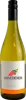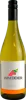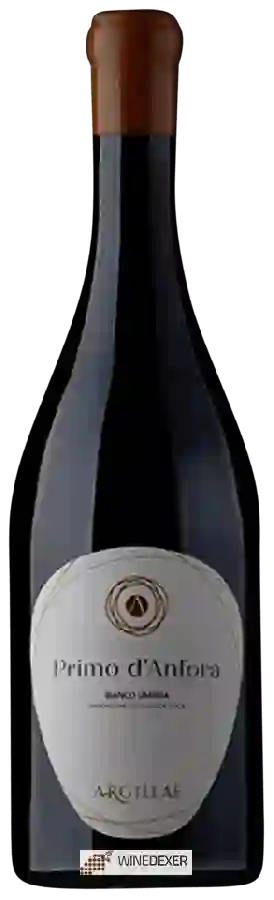
Winery ArgillaePrimo d'Anfora Bianco Umbria
 White wine


In the mouth this white wine is a powerful with a nice freshness.
This wine generally goes well with vegetarian, appetizers and snacks or lean fish.

Taste structure of the Primo d'Anfora Bianco Umbria from the Winery Argillae
Light | Bold | |
Dry | Sweet | |
Soft | Acidic |
In the mouth the Primo d'Anfora Bianco Umbria of Winery Argillae in the region of Umbria is a powerful with a nice freshness.
Food and wine pairings with Primo d'Anfora Bianco Umbria
Pairings that work perfectly with Primo d'Anfora Bianco Umbria



Original food and wine pairings with Primo d'Anfora Bianco Umbria


The Primo d'Anfora Bianco Umbria of Winery Argillae matches generally quite well with dishes of pasta, vegetarian or appetizers and snacks such as recipes of pasta with mussels, goat cheese and bacon quiche or cream of asparagus soup in verrines.
Details and technical informations about Winery Argillae's Primo d'Anfora Bianco Umbria.
Discover the grape variety: Grolleau Gris
Lively, fruity fresh whites and rosés to enjoy young, with a pale golden to salmon robe and an airy palate, with signature aromas of red fruits (strawberry, redcurrant), white flowers and fresh notes. Enjoying a fine qualitative revival. A component of Rosé de Loire AOC, Touraine AOC and IGP Val de Loire; grown in Anjou and Touraine. Grey-skinned mutation of Grolleau, an indigenous French variety from the Loire Valley.
Last vintages of this wine
The best vintages of Primo d'Anfora Bianco Umbria from Winery Argillae are 0, 2016
Informations about the Winery Argillae
The Winery Argillae is one of of the world's greatest estates. It offers 9 wines for sale in the of Umbria to come and discover on site or to buy online.

The wine region of Umbria
"Green heart" of Italy, cradle of Sagrantino: exceptional tannic red in Sagrantino di Montefalco DOCG, dense and concentrated with notes of blackberry, candied plum, liquorice, spice and leather, powerful tannins and long ageing. Suppler Sangiovese in blends, Cabernet and Merlot in Torgiano DOCG. Orvieto whites based on Grechetto and Trebbiano, full and almondy, from dry to sweet Muffato. ~13,000 ha between Tuscany and Lazio.
The word of the wine: Mistelle
Unfermented must with added brandy, also called liqueur wine: Pineau des Charentes, Floc de Gascogne, Macvin du Jura, Ratafia, Cartagène du Languedoc.