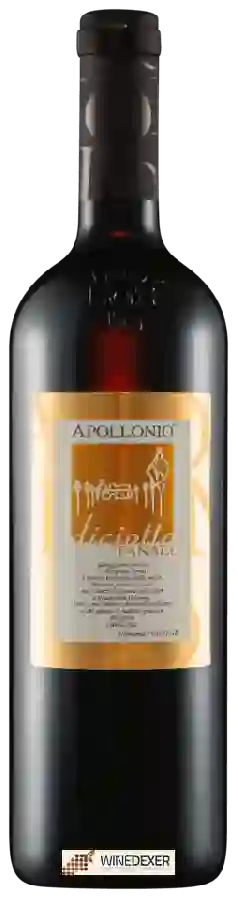
Winery ApollonioDiciotto Fanali
 Pink wine


This wine generally goes well with

Wine flavors and olphactive analysis



On the nose the Diciotto Fanali of Winery Apollonio in the region of Puglia often reveals types of flavors of non oak, earth or oak and sometimes also flavors of red fruit.
Details and technical informations about Winery Apollonio's Diciotto Fanali.
Discover the grape variety: Pagadebiti
Lively, fresh dry whites with a pale golden colour, a supple palate with preserved acidity and aromas of stone fruits (apple, pear), white flowers and sweet almond notes. Highly productive. A traditional component of Romagnan blends, contributing to the viticultural identity of modern Emilia-Romagna with several dedicated DOCs. Indigenous Italian white variety from Emilia-Romagna, whose name means "pays debts" in reference to its historically high yields.
Last vintages of this wine

The best vintages of Diciotto Fanali from Winery Apollonio are 2016, 2015, 2014, 2018 and 2013.
Informations about the Winery Apollonio
The Winery Apollonio is one of of the world's greatest estates. It offers 61 wines for sale in the of Salento to come and discover on site or to buy online.

The wine region of Salento
Heel of the Italian boot, sunny and generous vineyard. Fleshy reds: signature Negroamaro ("black-bitter") deep and sturdy, notes of black cherry, plum, spices and a characteristic bitter finish, star in Salice Salentino DOC. Opulent jammy Primitivo di Manduria (= Zinfandel) with notes of black fruits, chocolate and raisin. Supple Malvasia Nera.
The wine region of Puglia
Heel of the boot, 80% red vineyard, sunny and generous. Fleshy, jammy Primitivo (= Zinfandel) with notes of black cherry, plum, chocolate and spices, powerful alcohol and melted tannins, a star in Primitivo di Manduria. Deep, structured Negroamaro (black-bitter) with a bitter finish in Salice Salentino. Structured Nero di Troia, spicy Susumaniello.
The word of the wine: Thinning
Also known as green harvesting, the practice of removing excess bunches of grapes from certain vines, usually in July, but sometimes later. This is often necessary, but not always a good thing, as the remaining bunches often gain weight.