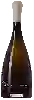
Winery Ángel SequeirosEvoé Albariño
 wine
wine
This wine generally goes well with
The Evoé Albariño of the Winery Ángel Sequeiros is in the top 0 of wines of Rías Baixas.
Details and technical informations about Winery Ángel Sequeiros's Evoé Albariño.
Discover the grape variety: Villaris
Complex interspecific crossing between the sirius and the white villard obtained in 1984 by Rudolf Eibach and Reinhard Topfer at the Federal Research Center Geilweilerhof in Sielbeldingen (Germany). The Villaris can be found in Germany, the Netherlands, England, ... in France it is almost unknown.
Informations about the Winery Ángel Sequeiros
The Winery Ángel Sequeiros is one of of the world's greatest estates. It offers 7 wines for sale in the of Rías Baixas to come and discover on site or to buy online.

The wine region of Rías Baixas
The wine region of Rías Baixas is located in the region of Galice of Spain. Wineries and vineyards like the Domaine Raúl Pérez or the Domaine Pazo de Rubianes produce mainly wines white, sparkling and red. The most planted grape varieties in the region of Rías Baixas are Albarino, Loureiro and Caino blanco, they are then used in wines in blends or as a single variety. On the nose of Rías Baixas often reveals types of flavors of grapefruit, mint or chamomile and sometimes also flavors of apple blossom, green melon or beeswax.
The wine region of Galice
Galicia is one of the 17 first-level administrative regions (called comunidades autónomas) of Spain. It occupies the northwestern corner of the Iberian Peninsula, and is exposed on two sides to the Atlantic Ocean. To the South is Portugal, to the east Castilla y Leon. Viticulture has a Long tradition in Galicia, introduced to the region by the ancient Romans and continued by monks throughout the Middle Ages.
The word of the wine: Tries (harvest by)
Harvesting in several successive passages to harvest at their optimal concentration the grapes affected by noble rot. They allow the production of great sweet wines.