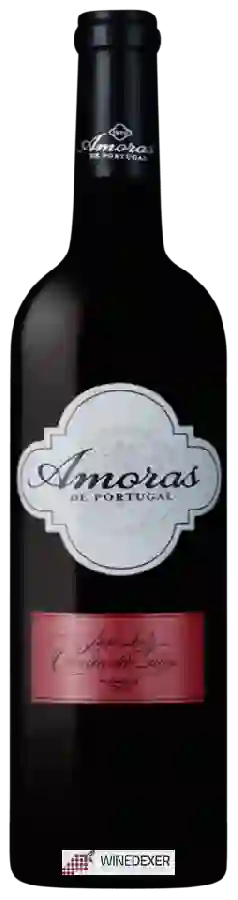
Winery AmorasTinto
 Red wine



In the mouth this red wine is a powerful with a nice freshness.
This wine generally goes well with poultry, beef or veal.

Taste structure of the Tinto from the Winery Amoras
Light | Bold | |
Smooth | Tannic | |
Dry | Sweet | |
Soft | Acidic |
In the mouth the Tinto of Winery Amoras in the region of Lisboa is a powerful with a nice freshness.
Wine flavors and olphactive analysis





On the nose the Tinto of Winery Amoras in the region of Lisboa often reveals types of flavors of non oak, earth or microbio and sometimes also flavors of oak, spices or red fruit.
Food and wine pairings with Tinto
Pairings that work perfectly with Tinto



Original food and wine pairings with Tinto

The Tinto of Winery Amoras matches generally quite well with dishes of beef, pasta or veal such as recipes of venison leg in casserole, chinese fried shrimp ravioli or beef bourguignon with cookéo.
Details and technical informations about Winery Amoras's Tinto.
Discover the grape variety: Candin
Simple and fresh dry whites, pale golden colour, supple mouth with moderate acidity, with understated aromas of citrus and white flowers. Discreet rustic profile. Preserved in a few ampelographic collections as a heritage variety, studied for its genetic interest. Rare and poorly documented white grape grown in very small quantities.
Last vintages of this wine
The best vintages of Tinto from Winery Amoras are 2018, 2017, 2016, 0
Informations about the Winery Amoras
The Winery Amoras is one of of the world's greatest estates. It offers 4 wines for sale in the of Lisboa to come and discover on site or to buy online.

The wine region of Lisboa
Vast coastal IGP north of Lisbon, Portugal's largest producer by volume. Accessible, sun-filled reds: fruity, spicy Castelão, dense Touriga Nacional (black fruit, violet), fleshy Trincadeira, deep Alicante Bouschet. Fresh, mineral whites: straight, lemony Arinto (star of Bucelas), aromatic Fernão Pires, round Vital and Malvasia. Structured reds from Alenquer, sparkling at Óbidos.
The word of the wine: Hybrid
Term designating grape varieties obtained from two different vine species.


