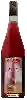
Winery Quinta da PelladaQuinta de Saes Baga - Pinot Noir Rosé
 Pink wine
This wine is a blend of 2 varietals which are the Baga and the Pinot noir.
This wine generally goes well with pork, poultry or veal.

Food and wine pairings with Quinta de Saes Baga - Pinot Noir Rosé
Pairings that work perfectly with Quinta de Saes Baga - Pinot Noir Rosé



Original food and wine pairings with Quinta de Saes Baga - Pinot Noir Rosé


The Quinta de Saes Baga - Pinot Noir Rosé of Winery Quinta da Pellada matches generally quite well with dishes of veal, pork or game (deer, venison) such as recipes of veal chop with rosemary, pan-fried black pudding with apples or boar in civet.
Details and technical informations about Winery Quinta da Pellada's Quinta de Saes Baga - Pinot Noir Rosé.
Discover the grape variety: Baga
Structured and tannic reds with a deep colour and high acidity, on aromas of black cherry, blackberry, plum, spices, leather, tobacco and mineral notes. Tannic and late-ripening, it requires long ageing to round out, then offers fine keeping potential. The absolute star of Bairrada DOC in central Portugal (clay-limestone baga soils), also made as traditional method sparkling wines and taut rosés. Native Portuguese variety, long underrated and now rehabilitated.
Informations about the Winery Quinta da Pellada
The Winery Quinta da Pellada is one of of the world's great estates. It offers 58 wines for sale in the of Dão to come and discover on site or to buy online.

The wine region of Dão
"Burgundy of Portugal": elegance and finesse at altitude. Signature Touriga Nacional as red: deep and perfumed with signature notes of violet, blackberry, black cherry, bergamot and pine resin, fine tannins and freshness drawn taut. Blended with fruity Alfrocheiro, supple Jaen (Mencía) and structured Tinta Roriz. Encruzado whites, a Portuguese reference: ample and mineral (pear, honey, hazelnut, age-worthy).
The wine region of Beiras
Vast region of north-central Portugal, a fragmented mosaic of distinct sub-regions. In the west, Bairrada makes dense Baga reds with notes of black cherry, blackberry and leather, firm tannins — the base of the great Portuguese sparkling wines. In the centre, Dao produces fine Touriga Nacional reds (violet, raspberry, spice) and elegant Encruzado whites (flowers, citrus, butter). To the continental east, fleshy Touriga of Beira Interior and aromatic Fernao Pires.
The word of the wine: INAO glass
Glass adapted to wine tasting, created in the 1970s by the Institut national des appellations d'origine. At the time, it had the advantage of offering a standardised tool to all tasters. It is characterized by a wide base that allows for good ventilation and a narrow mouth (opening of the glass) to concentrate the aromas. Many high-performance glasses have been created based on this model.