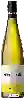
Winery AltenkirchWeissburgunder
 White wine
In the mouth this white wine is a with a nice freshness.
This wine generally goes well with rich fish (salmon, tuna etc), shellfish or mild and soft cheese.
Taste structure of the Weissburgunder from the Winery Altenkirch
Light | Bold | |
Dry | Sweet | |
Soft | Acidic |
In the mouth the Weissburgunder of Winery Altenkirch in the region of Rheingau is a with a nice freshness.
Food and wine pairings with Weissburgunder
Pairings that work perfectly with Weissburgunder


Original food and wine pairings with Weissburgunder

The Weissburgunder of Winery Altenkirch matches generally quite well with dishes of rich fish (salmon, tuna etc), shellfish or mild and soft cheese such as recipes of tuna and mozzarella pie, real swiss fondue or raclette in the oven.
Details and technical informations about Winery Altenkirch's Weissburgunder.
Discover the grape variety: Barras
It most certainly originates from the Tarn region, a variety that has completely disappeared from the vineyard and is therefore on the way out. It was very difficult to find documentation concerning it, especially since there is a slight confusion with malpé. D.N.A. analyses processed by a specific software (U.M.R.-A.G.A.P. Montpellier) indicate that malpé is the result of a cross between cahours and fer.
Informations about the Winery Altenkirch
The Winery Altenkirch is one of of the world's great estates. It offers 35 wines for sale in the of Rheingau to come and discover on site or to buy online.

The wine region of Rheingau
Rheingau is one of the most important of Germany's 13 Anbaugebiete wine regions. However it is far from the biggest; with 3,076 hectares (7,600 acres) of Vineyard">Vineyards documented in 2012, its output is around one tenth of that from the Pfalz and Rheinhessen regions. Located on the Rhine a 20-minute drive west of Frankfurt, the -gau suffix denotes that it was once a county of the Frankish Empire. The classic Rheingau wine is a DryRiesling with pronounced Acidity and aromas of citrus fruits and smoke-tinged minerality – typically more "masculine" than its equivalent from the Mosel.
The word of the wine: Courgée
Name of the fruiting branch left after pruning and which is then arched along the trellis in the Jura (in the Mâconnais, it is called the tail).