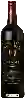
Winery Albert SchweitzerChâteau Puy de Lignac Bordeaux
 Red wine


In the mouth this red wine is a powerful with a nice balance between acidity and tannins.
This wine generally goes well with poultry, beef or veal.
Taste structure of the Château Puy de Lignac Bordeaux from the Winery Albert Schweitzer
Light | Bold | |
Smooth | Tannic | |
Dry | Sweet | |
Soft | Acidic |
In the mouth the Château Puy de Lignac Bordeaux of Winery Albert Schweitzer in the region of Bordeaux is a powerful with a nice balance between acidity and tannins.
Food and wine pairings with Château Puy de Lignac Bordeaux
Pairings that work perfectly with Château Puy de Lignac Bordeaux



Original food and wine pairings with Château Puy de Lignac Bordeaux

The Château Puy de Lignac Bordeaux of Winery Albert Schweitzer matches generally quite well with dishes of beef, veal or game (deer, venison) such as recipes of grandma melanie's cassoulet, fillet of beef with morels or fillet of venison.
Details and technical informations about Winery Albert Schweitzer's Château Puy de Lignac Bordeaux.
Discover the grape variety: Perdin
Interspecific cross, obtained in 1981, between 7489 (direct white producer hybrid) and csaba pearl.
Informations about the Winery Albert Schweitzer
The Winery Albert Schweitzer is one of of the world's greatest estates. It offers 19 wines for sale in the of Bordeaux to come and discover on site or to buy online.

The wine region of Bordeaux
Bordeaux, in southwestern France, is one of the most famous, prestigious and prolific wine regions in the world. The majority of Bordeaux wines (nearly 90% of the production Volume) are the Dry, medium and Full-bodied red Bordeaux blends for which it is famous. The finest (and most expensive) are the wines of the great châteaux of Haut-Médoc and the right bank appellations of Saint-Émilion and Pomerol. The former focuses (at the highest level) on Cabernet Sauvignon, the latter on Merlot.
The word of the wine: Second wine
In the Bordeaux vineyard, the second wine is a lesser-aged wine made from the youngest vines, while the main wine of the château is called the "grand vin".