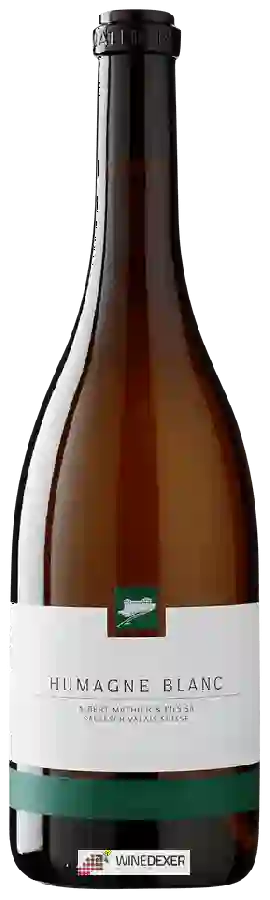
Winery Albert Mathier & FilsHumagne Blanc
 White wine



This wine generally goes well with
The Humagne Blanc of the Winery Albert Mathier & Fils is in the top 80 of wines of Salgesch.

Details and technical informations about Winery Albert Mathier & Fils's Humagne Blanc.
Discover the grape variety: Humagne blanche
Structured, original whites with a golden robe, ample palate and fresh alpine acidity, showing aromas of yellow fruits (pear, quince), candied citrus, linden, honey, white flowers and mineral notes with a slightly bitter finish. Reputed tonic, once given to new mothers. Discreet star of the Valais hillsides (Sierre, Sion, Conthey). Autochthonous Valais variety, one of Switzerland's oldest (recorded since the 14th century), with no link to humagne rouge.
Last vintages of this wine
The best vintages of Humagne Blanc from Winery Albert Mathier & Fils are 0, 2016
Informations about the Winery Albert Mathier & Fils
The Winery Albert Mathier & Fils is one of of the world's great estates. It offers 55 wines for sale in the of Salgesch to come and discover on site or to buy online.

The wine region of Salgesch
Wine commune of the Upper Valais (Switzerland), nicknamed the "Swiss capital of red wines". Pinot Noir flagship red: fine and silky with signature notes of red cherry, wild strawberry, raspberry, undergrowth, sweet spices and mineral touch, fine tannins and elegant palate — alpine expression. Supple Gamay, dense Cornalina (autochthonous), spicy Humagne rouge. Whites: taut Chasselas (Fendant), mineral and saline Petite Arvine, ancient Heida.
The wine region of Valais
Switzerland's largest vineyard, capital of native grapes. Straight, precise alpine whites: light, floral Chasselas (Fendant), signature Petite Arvine with saline, grapefruit and rhubarb notes, rich, apricoty Amigne, mineral Humagne Blanche. Altitude reds: fine Pinot Noir, crisp Gamay, native Cornalin and Humagne Rouge, spicy and deep. Highly precise alpine age-worthy wines.
The word of the wine: Aging on lees
Maturing on the lees enhances the stability, aromatic complexity and texture of white wines, which gain in body and volume. This phenomenon is induced by autolysis, the process of self-degradation of the lees.