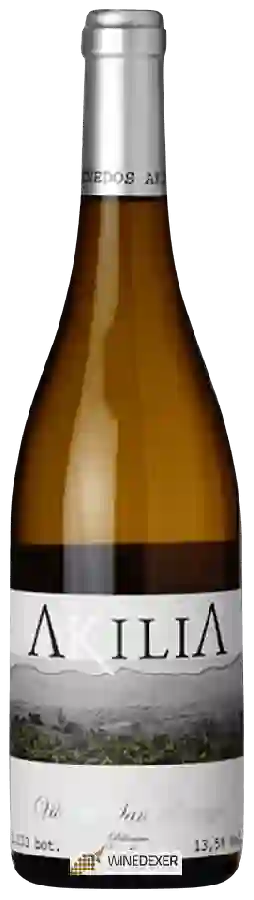
Winery AkiliaVilla de San Lorenzo Blanco
 White wine



This wine generally goes well with
Wine flavors and olphactive analysis

On the nose the Villa de San Lorenzo Blanco of Winery Akilia in the region of Castille-et-Léon often reveals types of flavors of earth.
Details and technical informations about Winery Akilia's Villa de San Lorenzo Blanco.
Discover the grape variety: Madeleine angevine O.
This variety was obtained in the 19th century by Christian Oberlin, by crossing the madeleine angevine with the bouquettraube, registered in the Official Catalogue of vine varieties list A1. It should not be confused with the said Madeleine Angevine because its resemblance is strong, at least in its bunches. Today, Madeleine angevine Oberlin is no longer cultivated, it is still only found in a few private homes, usually on trellises. - Synonymy: angevine oberlin, madeleine blonde oberlin (the synonymy of grape varieties, click here!)
Last vintages of this wine
The best vintages of Villa de San Lorenzo Blanco from Winery Akilia are 2015, 2013, 2017, 2014 and 2016.
Informations about the Winery Akilia
The Winery Akilia is one of of the world's greatest estates. It offers 10 wines for sale in the of Bierzo to come and discover on site or to buy online.

The wine region of Bierzo
The wine region of Bierzo is located in the region of Castille-et-Léon of Spain. Wineries and vineyards like the Domaine Descendientes de J. Palacios or the Domaine Descendientes de J. Palacios produce mainly wines red, white and pink.
The wine region of Castille-et-Léon
Located in the northern half of the Central Iberian plateau, Castilla y León is the largest of Spain's 17 administrative regions, covering about one-fifth of the country's total area. It extends about 350 kilometres (220 miles) from central Spain to the northern coast. Just as wide, it connects the Rioja wine region to the Portuguese border. Red wines reign supreme in Castilla y León, and the Tempranillo grape is undoubtedly the king.
The word of the wine: Thermoregulation
Control of the vinification temperatures (by circulating hot or cold water on the walls of the vats, for example). This is a major step forward, which in particular helps to preserve the freshness of the aromas threatened by excessive temperature rises during fermentation.