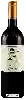
Agelakis WineryCornelia Dry Red
 Red wine



In the mouth this red wine is a powerful.
This wine generally goes well with beef, game (deer, venison) or lamb.
Taste structure of the Cornelia Dry Red from the Agelakis Winery
Light | Bold | |
Smooth | Tannic | |
Dry | Sweet | |
Soft | Acidic |
In the mouth the Cornelia Dry Red of Agelakis Winery in the region of Piedmont is a powerful.
Food and wine pairings with Cornelia Dry Red
Pairings that work perfectly with Cornelia Dry Red



Original food and wine pairings with Cornelia Dry Red

The Cornelia Dry Red of Agelakis Winery matches generally quite well with dishes of beef, pasta or lamb such as recipes of beef strogonoff, salmon and spinach lasagna or merguez with lentils.
Details and technical informations about Agelakis Winery's Cornelia Dry Red.
Discover the grape variety: Merlot
Merlot is a red grape variety with small black berries that appeared at the end of the 18th century. It is produced in most of the Bordeaux terroirs, where it represents 58% of the planted area, and its best terroir is located in Pomerol and Saint-Emilion on cool, clay-limestone soils. At the mythical Château Pétrus, the wine is made with 95% Merlot, with a dark, dense colour, aromas of red and black fruits and a superb range of flavours, the Merlot transforms during its ageing to give way to notes of prunes, undergrowth and spices. On the palate, it is supple with distinguished tannins. It is often blended with Cabernet Sauvignon. Merlot is no longer exclusive to Bordeaux, it is nowadays vinified all over the world.
Last vintages of this wine
The best vintages of Cornelia Dry Red from Agelakis Winery are 2017, 0, 2016
Informations about the Agelakis Winery
The Agelakis Winery is one of of the world's greatest estates. It offers 7 wines for sale in the of Piedmont to come and discover on site or to buy online.

The wine region of Piedmont
Piedmont (Piemonte) holds an unrivalled place among the world's finest wine regions. Located in northwestern Italy, it is home to more DOCG wines than any other Italian region, including such well-known and respected names as Barolo, Barbaresco and Barbera d'Asti. Though famous for its Austere, Tannic, Floral">floral reds made from Nebbiolo, Piedmont's biggest success story in the past decade has been Moscato d'Asti, a Sweet, Sparkling white wine. Piedmont Lies, as its name suggests, at the foot of the Western Alps, which encircle its northern and western sides and form its naturally formidable border with Provence, France.
The word of the wine: Tannic
Said of an astringent wine rich in tannins.