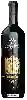
Winery A. de LuzePrince de Francais
 Red wine
In the mouth this red wine is a powerful with a nice balance between acidity and tannins.
This wine generally goes well with poultry, beef or veal.
Taste structure of the Prince de Francais from the Winery A. de Luze
Light | Bold | |
Smooth | Tannic | |
Dry | Sweet | |
Soft | Acidic |
In the mouth the Prince de Francais of Winery A. de Luze in the region of Bordeaux is a powerful with a nice balance between acidity and tannins.
Food and wine pairings with Prince de Francais
Pairings that work perfectly with Prince de Francais



Original food and wine pairings with Prince de Francais

The Prince de Francais of Winery A. de Luze matches generally quite well with dishes of beef, veal or game (deer, venison) such as recipes of pork tongue with tomato sauce and pickles, stuffed cutlets or oven roasted rabbit that cooks itself!.
Details and technical informations about Winery A. de Luze's Prince de Francais.
Discover the grape variety: Villaris
Complex interspecific crossing between the sirius and the white villard obtained in 1984 by Rudolf Eibach and Reinhard Topfer at the Federal Research Center Geilweilerhof in Sielbeldingen (Germany). The Villaris can be found in Germany, the Netherlands, England, ... in France it is almost unknown.
Informations about the Winery A. de Luze
The Winery A. de Luze is one of of the world's great estates. It offers 171 wines for sale in the of Bordeaux to come and discover on site or to buy online.

The wine region of Bordeaux
Bordeaux, in southwestern France, is one of the most famous, prestigious and prolific wine regions in the world. The majority of Bordeaux wines (nearly 90% of the production Volume) are the Dry, medium and Full-bodied red Bordeaux blends for which it is famous. The finest (and most expensive) are the wines of the great châteaux of Haut-Médoc and the right bank appellations of Saint-Émilion and Pomerol. The former focuses (at the highest level) on Cabernet Sauvignon, the latter on Merlot.
The word of the wine: Extraction
All the methods (pumping over, punching down) that allow the colour and tannins to be extracted from the grape skin during maceration, before fermentation begins. It is also possible to macerate after fermentation, but gently, so as not to extract the tannins from the seeds, which are greener. Because of its solvent power, alcohol favours extraction.