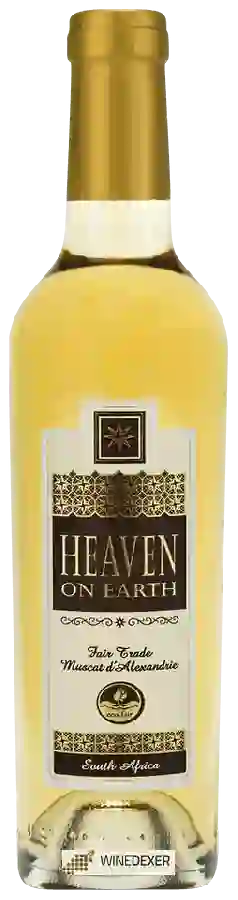
Winery Stellar OrganicsHeaven On Earth
 Sweet wine



This wine generally goes well with spicy food and sweet desserts.

Wine flavors and olphactive analysis





On the nose the Heaven On Earth of Winery Stellar Organics in the region of Western Cape often reveals types of flavors of non oak, earth or microbio and sometimes also flavors of vegetal, oak or tree fruit.
Food and wine pairings with Heaven On Earth
Pairings that work perfectly with Heaven On Earth


Original food and wine pairings with Heaven On Earth
The Heaven On Earth of Winery Stellar Organics matches generally quite well with dishes of spicy food or sweet desserts such as recipes of shrimp in coconut milk curry or rice with milk.
Details and technical informations about Winery Stellar Organics's Heaven On Earth.
Discover the grape variety: Egiodola
Intensely coloured, structured reds with a dark ruby robe, firm tannins and a dense palate of blackfruit (blackberry, blackcurrant, plum), cherry, spices, black pepper and balsamic notes. A tannin-rich profile adding colour and structure to southern blends. Grown mainly in the South-West (Aveyron, Tarn, Aquitaine) for IGP and VDP wines. French hybrid created in 1954 by INRA Bordeaux (fer servadou × abouriou), a modern teinturier grape.
Last vintages of this wine
The best vintages of Heaven On Earth from Winery Stellar Organics are 2016, 0, 2014, 2013 and 2008.
Informations about the Winery Stellar Organics
The Winery Stellar Organics is one of of the world's greatest estates. It offers 84 wines for sale in the of Western Cape to come and discover on site or to buy online.

The wine region of Western Cape
Cradle of South African wine. Signature Chenin Blanc (Steen, 20%) in ample, fresh whites with notes of quince, yellow apple, honey and acacia flower, from crisp dry to sweet. Sharp, iodised Sauvignon Blanc (Walker Bay, Constantia), balanced Chardonnay. Reds: emblematic Pinotage with roasted aromas (coffee, plum, smoke), firm Cabernet Sauvignon, spicy Syrah.
The word of the wine: Rosé de saignée
A method of making rosé wine that consists of partially draining a vat of red wine after a few hours of maceration. The longer the maceration, the stronger the colour. This practice gives rich and expressive rosés.