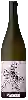
Winery The BlacksmithFace / Rip Colombar PetNat
 wine
wine
This wine generally goes well with
The Face / Rip Colombar PetNat of the Winery The Blacksmith is in the top 0 of wines of Swartland.
Details and technical informations about Winery The Blacksmith's Face / Rip Colombar PetNat.
Discover the grape variety: Panse de Provence
Most certainly of oriental origin, introduced in Spain then spread in France, in Italy, in North Africa... more generally on all the Mediterranean basin. It can also be found in the United States, Thailand, ... and in many other countries. It should not be confused with the early or Sicilian pansy at first maturity.
Last vintages of this wine



The best vintages of Face / Rip Colombar PetNat from Winery The Blacksmith are 0
Informations about the Winery The Blacksmith
The Winery The Blacksmith is one of of the world's great estates. It offers 23 wines for sale in the of Swartland to come and discover on site or to buy online.

The wine region of Swartland
The wine region of Swartland is located in the region of Coastal Region of Western Cape of South Africa. Wineries and vineyards like the Domaine Sadie Family or the Domaine Sadie Family produce mainly wines red, white and pink. The most planted grape varieties in the region of Swartland are Chenin blanc, Mourvèdre and Pinotage, they are then used in wines in blends or as a single variety. On the nose of Swartland often reveals types of flavors of cherry, marmalade or cantaloupe and sometimes also flavors of chard, poire nashi or red cherry.
The wine region of Western Cape
The Western Cape is home to the vast majority of the South African wine industry, and the country's two most famous wine regions, Stellenbosch and Paarl. The city of Cape Town serves as the epicenter of the Cape Winelands, a mountainous, biologically diverse area in the south-western corner of the African continent. A wide variety of wines are produced here. Wines from the Shiraz and Pinotage">Pinotage grape varieties can be fresh and juicy or Full-bodied and gutsy.
The word of the wine: Astringent
Said of a wine that is a bit harsh and rough on the palate. Astringency often appears in young red wines that are rich in tannins and need to be rounded out.