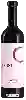
Weingut TeschRosé
 Pink wine


This wine generally goes well with
Details and technical informations about Weingut Tesch's Rosé.
Discover the grape variety: Bogdanusa
This grape variety was formerly cultivated in Croatia, more precisely on the island of Hvar in southern Dalmatia. In France, it is practically unknown.
Last vintages of this wine
The best vintages of Rosé from Weingut Tesch are 0
Informations about the Weingut Tesch
The Weingut Tesch is one of of the world's great estates. It offers 18 wines for sale in the of Mittelburgenland to come and discover on site or to buy online.

The wine region of Mittelburgenland
The wine region of Mittelburgenland is located in the region of Burgenland of Weinland of Austria. Wineries and vineyards like the Domaine Gesellmann or the Domaine Gesellmann produce mainly wines red, white and pink. The most planted grape varieties in the region of Mittelburgenland are Zweigelt, Merlot and Cabernet-Sauvignon, they are then used in wines in blends or as a single variety. On the nose of Mittelburgenland often reveals types of flavors of cherry, cream or vegetal and sometimes also flavors of cigar, floral or dried fruit.
The wine region of Weinland
Weinviertel DAC – whose name translates as "wine quarter" – is an appellation in Niederösterreich (Lower Austria). It is by far the largest Districtus Austriae Controllatus wine region in Austria. It was also the first Austrian wine region to be given that title, in 2002, with a DAC Reserve designation added in 2009. The designation applies only to white wines from the Grüner Veltliner Grape variety.
The word of the wine: Muscat blanc à petits grains
A white grape variety cultivated since antiquity on the shores of the Mediterranean, it is considered the noblest of the muscats. It is mainly used to make sweet wines, often from mutage. In France, it is the sole variety used in many natural sweet wines: muscat-de-frontignan, muscat-de-mireval, muscat-de-lunel, muscat-de-saint-jean-de-minervois, muscat-de-beaumes-de-venise, muscat-du-cap-corse. Combined with Muscat d'Alexandrie, it gives Muscat-de-Rivesaltes. It is also used to make sparkling white wines (clairette-de-die; moscato d'asti and asti spumante in Italy) and dry wines (alsace-muscat). Powerfully aromatic and complex, its wines evoke fresh grapes, roses, exotic fruits, citrus fruits and spices.