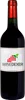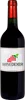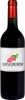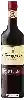
Weingut SchulzeKloster Posaer Klosterberg Zeitz Dornfelder Halbtrocken
 Red wine
In the mouth this red wine is a .
This wine generally goes well with pork, poultry or veal.
Taste structure of the Kloster Posaer Klosterberg Zeitz Dornfelder Halbtrocken from the Weingut Schulze
Light | Bold | |
Smooth | Tannic | |
Dry | Sweet | |
Soft | Acidic |
In the mouth the Kloster Posaer Klosterberg Zeitz Dornfelder Halbtrocken of Weingut Schulze in the region of Saale-Unstrut is a .
Food and wine pairings with Kloster Posaer Klosterberg Zeitz Dornfelder Halbtrocken
Pairings that work perfectly with Kloster Posaer Klosterberg Zeitz Dornfelder Halbtrocken



Original food and wine pairings with Kloster Posaer Klosterberg Zeitz Dornfelder Halbtrocken

The Kloster Posaer Klosterberg Zeitz Dornfelder Halbtrocken of Weingut Schulze matches generally quite well with dishes of pasta, veal or pork such as recipes of pasta with goat cheese, thyme and bacon, paupiettes in a casserole with cream or pork roulades with cream and mushrooms.
Details and technical informations about Weingut Schulze's Kloster Posaer Klosterberg Zeitz Dornfelder Halbtrocken.
Discover the grape variety: Dornfelder
German, intraspecific cross made in 1955 by August Karl Herold (1902-1973) between the helfensteiner and the heroldrebe (more details, click here!). With these same parents he also obtained the hegel. The Dornfelder can be found in Switzerland, United Kingdom, Belgium, Germany, Austria, Czech Republic, Canada, United States, ... . Virtually unknown in France, we nevertheless recognize a certain interest in it due to its short phenological cycle and the quality of its wines, both rosé and red.
Informations about the Weingut Schulze
The Weingut Schulze is one of of the world's greatest estates. It offers 49 wines for sale in the of Saale-Unstrut to come and discover on site or to buy online.

The wine region of Saale-Unstrut
Saale-Unstrut is the northernmost of Germany's 13 wine-growing regions. At 51 degrees northern latitude, it is one of the most northerly wine regions in the world. It takes its name from the two rivers on the banks of which the Vines of the region grow, and is composed of three non-contiguous Parts located mainly in the federal state of Saxony-Anhalt, with around 650 hectares (1600 acres) of Vineyards, often terraced, on South and south-west-facing slopes along the narrow river valleys. A smaller area of 20 hectares (50 acres) is located in the state of Thüringen and a block of just 7 hectares (17 acres) in Brandenburg.
The word of the wine: Polyphenols
Substance contained essentially in the skin of the grape. The main ones are anthocyanins, which give red wines their colour and tannins.