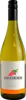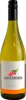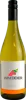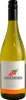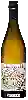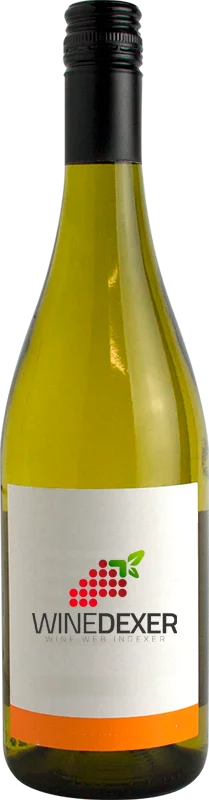
Weingut Schädler - Steffen MuglerCuvée XVIII-1
 White wine



This wine is a blend of 2 varietals which are the Cabernet blanc and the Scheurebe.
This wine generally goes well with vegetarian, rich fish (salmon, tuna etc) or shellfish.
Food and wine pairings with Cuvée XVIII-1
Pairings that work perfectly with Cuvée XVIII-1



Original food and wine pairings with Cuvée XVIII-1
The Cuvée XVIII-1 of Weingut Schädler - Steffen Mugler matches generally quite well with dishes of rich fish (salmon, tuna etc), shellfish or vegetarian such as recipes of salmon and spinach lasagna, paella de marisco (seafood paella) or goat cheese and bacon quiche.
Details and technical informations about Weingut Schädler - Steffen Mugler's Cuvée XVIII-1.
Discover the grape variety: Cabernet blanc
Interspecific cross between Cabernet Sauvignon and a long-unknown grape variety - that would be Regent - obtained in 1991 by Valentin Blattner from Soyhières (Switzerland) and propagated by Volker Freytag (Germany). No resistance gene has been identified to either mildew or powdery mildew. Cabernet blanc can be found in Switzerland, Belgium, the Netherlands, Germany, Austria, Luxembourg, the Czech Republic, Italy, England, etc., but is still little known in France.
Last vintages of this wine
The best vintages of Cuvée XVIII-1 from Weingut Schädler - Steffen Mugler are 0, 2018
Informations about the Weingut Schädler - Steffen Mugler
The Weingut Schädler - Steffen Mugler is one of of the world's greatest estates. It offers 27 wines for sale in the of Pfalz to come and discover on site or to buy online.

The wine region of Pfalz
Pfalz is a key wine producing region in western Germany, located between the Rhein/Rhine river and the low-lying Haardt mountain range (a natural continuation of the Alsatian Vosges). It covers a rectangle of land 45 miles (75km) Long and 15 miles (25km) wide. To the NorthLiesRheinhessen; to the South, the French border and Alsace. In terms of both quality and quantity, Pfalz is one of Germany's most important regions, and one which shows great promise for the future.
The word of the wine: Marc
Solid part resulting from the pressing of the grape (stalks, pips, skins).