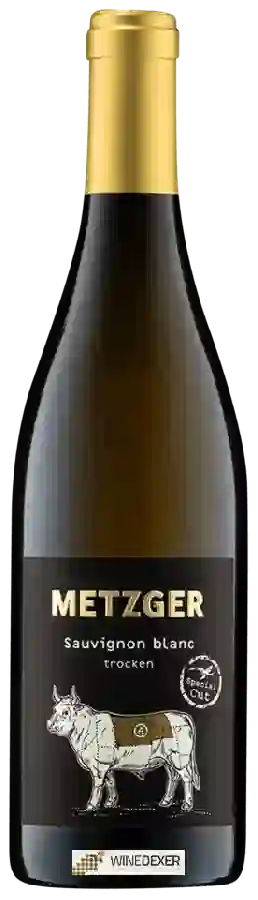
Weingut MetzgerSpecial Cut Sauvignon Blanc
 White wine
In the mouth this white wine is a with a nice freshness.
This wine generally goes well with vegetarian, shellfish or goat cheese.

Taste structure of the Special Cut Sauvignon Blanc from the Weingut Metzger
Light | Bold | |
Dry | Sweet | |
Soft | Acidic |
In the mouth the Special Cut Sauvignon Blanc of Weingut Metzger in the region of Pfalz is a with a nice freshness.
Food and wine pairings with Special Cut Sauvignon Blanc
Pairings that work perfectly with Special Cut Sauvignon Blanc



Original food and wine pairings with Special Cut Sauvignon Blanc
The Special Cut Sauvignon Blanc of Weingut Metzger matches generally quite well with dishes of shellfish, vegetarian or goat cheese such as recipes of shrimp marinade, broccoli and blue cheese quiche without pastry or tuna burgers.
Details and technical informations about Weingut Metzger's Special Cut Sauvignon Blanc.
Discover the grape variety: Rougeon
Colourful, fruity reds with an intense ruby colour, soft tannins and a supple palate, showing simple aromas of red fruits (cherry, raspberry), plum, soft spices and floral notes. An approachable style to drink young. Grown mainly in the United States (Pennsylvania, Missouri) and Canada (Ontario) for cold continental climate vineyards. French black hybrid created by Albert Seibel (Seibel 5898), resistant to fungal diseases.
Informations about the Weingut Metzger
The Weingut Metzger is one of of the world's great estates. It offers 96 wines for sale in the of Pfalz to come and discover on site or to buy online.

The wine region of Pfalz
Fleshy, dry, fruity Riesling is the region's signature: yellow peach, apricot, ripe citrus, lovely mineral tension. Germany's largest red-wine area (40%), with silky Spätburgunder showing red fruit and spice, darker structured Dornfelder, supple Portugieser. Some rounded Pinot Blanc and Pinot Gris. A 23,640 ha vineyard along the Haardt, among Germany's warmest (>2,000 h of sun).
The word of the wine: Phylloxera
Aphid that came from America and ravaged European vineyards at the end of the 19th century. It lives on the roots of the vine, from which it pumps the sap. The only vines capable of resisting it had to be imported from the United States, and then grafted onto their root system the wood of traditional French grape varieties. Today, grafted vines are always planted.