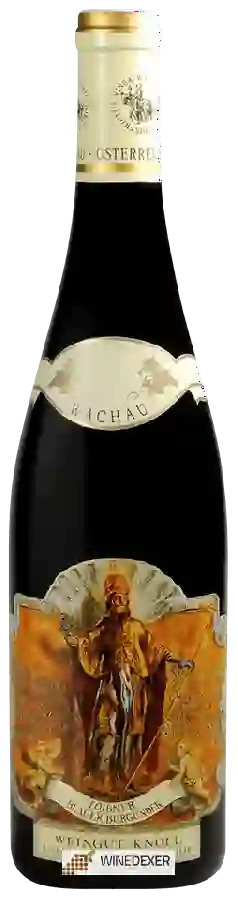
Weingut KnollLoibner Blauer Burgunder
 Red wine


This wine generally goes well with

Wine flavors and olphactive analysis

On the nose the Loibner Blauer Burgunder of Weingut Knoll in the region of Weinland often reveals types of flavors of earth, tree fruit.
Details and technical informations about Weingut Knoll's Loibner Blauer Burgunder.
Discover the grape variety: Gringet
Elegant, taut dry whites and sparkling wines with a pale golden colour, a slender palate and crisp alpine acidity, showing refined aromas of citrus (lemon), white flowers (acacia), pear, dried fruits and limestone mineral notes. A crystalline mountain character. Star of Ayze AOC in the Arve valley in still and sparkling styles, rare artisan cuvées. Savoyard indigenous variety related to Jurassian Savagnin, synonym of Roussette d'Ayze.
Last vintages of this wine
The best vintages of Loibner Blauer Burgunder from Weingut Knoll are 2012, 2011, 2015, 0 and 2013.
Informations about the Weingut Knoll
The Weingut Knoll is one of of the world's great estates. It offers 40 wines for sale in the of Wachau to come and discover on site or to buy online.

The wine region of Wachau
Austrian jewel of racy whites on Danube terraces (35 km): signature Grüner Veltliner as white king — full-bodied and peppery with notes of citrus, green apple, lentil, stone fruit and a peppery mineral touch, taut acidity. Taut, tropical Riesling on gneiss (gföhler) with notes of apricot, peach, citrus and racy minerality — great ageing. Steinfeder/Federspiel/Smaragd classification. Vertiginous slopes, loess and gneiss.
The wine region of Weinland
Vast German-speaking region in north-eastern Switzerland, the country's largest production area. Signature Pinot Noir (Blauburgunder): fine, fresh reds with notes of cherry, raspberry, undergrowth and sweet spices, silky tannins. Elegant, delicate style, often barrel-aged. Also light, floral Müller-Thurgau (Riesling-Sylvaner), lively, lemony native Räuschling, ample Pinot Gris.
The word of the wine: Cooperative cellar
A collective production structure to which winegrowers belong in order to pool their grapes, transform them into wine and ensure its marketing.