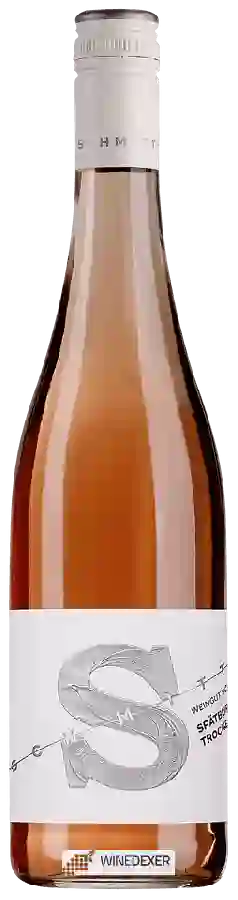
Weingut Egon SchmittSpätburgunder Rosé Trocken
 Pink wine



This wine generally goes well with vegetarian

Wine flavors and olphactive analysis

On the nose the Spätburgunder Rosé Trocken of Weingut Egon Schmitt in the region of Pfalz often reveals types of flavors of citrus fruit, red fruit.
Food and wine pairings with Spätburgunder Rosé Trocken
Pairings that work perfectly with Spätburgunder Rosé Trocken

Original food and wine pairings with Spätburgunder Rosé Trocken
The Spätburgunder Rosé Trocken of Weingut Egon Schmitt matches generally quite well with dishes of vegetarian such as recipes of broccoli and blue cheese quiche without pastry.
Details and technical informations about Weingut Egon Schmitt's Spätburgunder Rosé Trocken.
Discover the grape variety: Batoca
Lively, light whites best drunk young, with a pale golden robe, an airy palate with preserved acidity, and signature aromas of citrus (lemon), green apple, white flowers, and fresh herbaceous notes. Adds freshness and verve. Often blended with Loureiro and Arinto in Vinho Verde DOC. A native Portuguese white variety grown in Vinho Verde and the Douro.
Last vintages of this wine
The best vintages of Spätburgunder Rosé Trocken from Weingut Egon Schmitt are 2018, 2017, 0
Informations about the Weingut Egon Schmitt
The Weingut Egon Schmitt is one of of the world's greatest estates. It offers 82 wines for sale in the of Pfalz to come and discover on site or to buy online.

The wine region of Pfalz
Fleshy, dry, fruity Riesling is the region's signature: yellow peach, apricot, ripe citrus, lovely mineral tension. Germany's largest red-wine area (40%), with silky Spätburgunder showing red fruit and spice, darker structured Dornfelder, supple Portugieser. Some rounded Pinot Blanc and Pinot Gris. A 23,640 ha vineyard along the Haardt, among Germany's warmest (>2,000 h of sun).
The word of the wine: Burgundy melon
A white grape variety from Burgundy that is not widely used in its native region, but has spread to the Nantes region. It is the exclusive variety of Muscadet. It gives a dry pale yellow wine, supple and lively, with an intense bouquet, to which maturing on lees gives fatness and aromatic complexity.