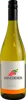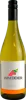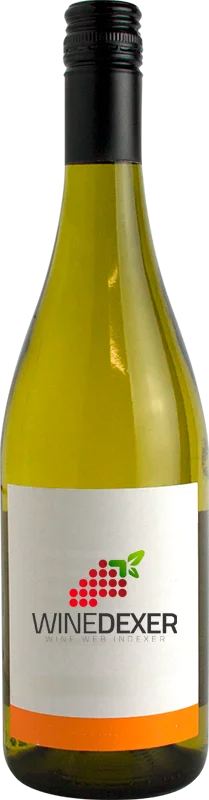
Winery Wein & HofSauvignon Blanc Trocken
 White wine
In the mouth this white wine is a with a nice freshness.
This wine generally goes well with vegetarian, shellfish or goat cheese.

Taste structure of the Sauvignon Blanc Trocken from the Winery Wein & Hof
Light | Bold | |
Dry | Sweet | |
Soft | Acidic |
In the mouth the Sauvignon Blanc Trocken of Winery Wein & Hof in the region of Baden is a with a nice freshness.
Food and wine pairings with Sauvignon Blanc Trocken
Pairings that work perfectly with Sauvignon Blanc Trocken


Original food and wine pairings with Sauvignon Blanc Trocken
The Sauvignon Blanc Trocken of Winery Wein & Hof matches generally quite well with dishes of shellfish, vegetarian or goat cheese such as recipes of scallops on a bed of leeks, quiche with bacon and gruyère cheese or mymy's cannelloni.
Details and technical informations about Winery Wein & Hof's Sauvignon Blanc Trocken.
Discover the grape variety: Mencia
Supple, elegant reds with a ruby robe and fine tannins, featuring aromas of raspberry, cherry, Mediterranean herbs, graphite, black pepper and very pronounced slate mineral notes. Fresh mouth, taut finish. The absolute star of Bierzo DO in Castilla y León and signature of Ribeira Sacra DO and Valdeorras DO in Galicia (heroic vine terraces). Also cultivated in Portugal under the name Jaen. Native Iberian grape from the northwest.
Informations about the Winery Wein & Hof
The Winery Wein & Hof is one of of the world's greatest estates. It offers 24 wines for sale in the of Baden to come and discover on site or to buy online.

The wine region of Baden
German capital of Pinot Noir (Spätburgunder): silky, fine reds with notes of red fruits, cherry, undergrowth and sweet spices, melted tannins. Round Grauburgunder (Pinot Gris), lively Weissburgunder, supple Müller-Thurgau, mineral Riesling. Germany's 3rd region (15,000 ha) in Baden-Württemberg facing Alsace, one of the country's warmest climates, volcanic soils at the Kaiserstuhl. Cradle of modern great German reds, elegant and fine.
The word of the wine: Drawing (liqueur de)
In champagne and sparkling wines of traditional method, addition to the wine, at the time of bottling (tirage) of sugars and yeasts dissolved in wine. These components will provoke the second fermentation in the bottle leading to the formation of carbon dioxide bubbles.