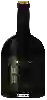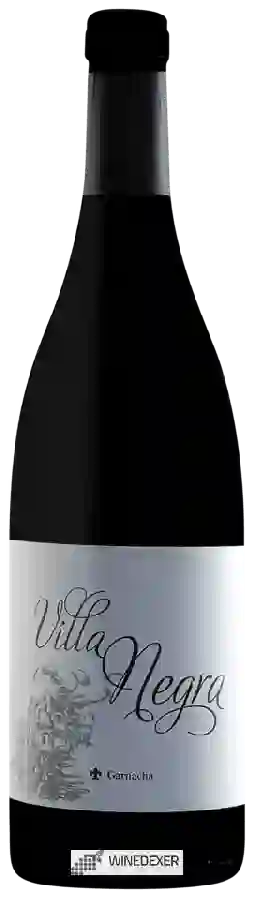
Winery Villa NegraGarnacha
 Red wine



In the mouth this red wine is a powerful.
This wine generally goes well with poultry, beef or game (deer, venison).
Taste structure of the Garnacha from the Winery Villa Negra
Light | Bold | |
Smooth | Tannic | |
Dry | Sweet | |
Soft | Acidic |
In the mouth the Garnacha of Winery Villa Negra in the region of Valence is a powerful.
Food and wine pairings with Garnacha
Pairings that work perfectly with Garnacha



Original food and wine pairings with Garnacha


The Garnacha of Winery Villa Negra matches generally quite well with dishes of beef, pasta or lamb such as recipes of chili con carne, chinese noodles with shrimp or moroccan lamb shoulder.
Details and technical informations about Winery Villa Negra's Garnacha.
Discover the grape variety: Bourboulenc
Bourboulenc is mainly grown in the southern part of France. It is a white grape variety that ripens quite late. It can only be harvested around 25 September and for an average of only one month. Bourboulenc is particularly fond of low-lying, but at the same time warm and dry locations. The aroma of this grape variety is not very pronounced, but it has a certain exotic fruit and floral aroma such as broom. The result is a low alcohol wine with subtle and fleeting aromas. Blanquette, bourboulanc, bourboulenque, doucillon, clairette dorée and clairette blanche are all names that can designate bourboulenc. This grape variety is very sensitive to diseases common to all vine plants such as magnesium deficiency, mildew and oidium. Bourboulenc can be used as a table grape. Most French people keep the bunches until Christmas in order to present them on the festive table as desserts.
Last vintages of this wine
The best vintages of Garnacha from Winery Villa Negra are 2011, 2010, 0
Informations about the Winery Villa Negra
The Winery Villa Negra is one of of the world's greatest estates. It offers 5 wines for sale in the of Valence to come and discover on site or to buy online.

The wine region of Valence
Valencia is a province in the centre of Spain's sunny east coast, perhaps better known for its oranges (and paella) than its wine. The administrative Center of Valencia is the city of the same name, the third largest in Spain and the largest port on the Mediterranean. Archaeological evidence suggests that wine making in Valencia dates back more than a thousand years, but the region has never been particularly prominent on the world wine map. In modern times, Valencia's wine production has focused on quantity rather than quality, although this is gradually changing.
The word of the wine: Tank
Made of concrete, stainless steel, enamelled steel or wood (now fashionable again), the vat is an indispensable tool during the entire winemaking process. It is also used to mature certain wines that do not need to go into barrel, or to preserve them.