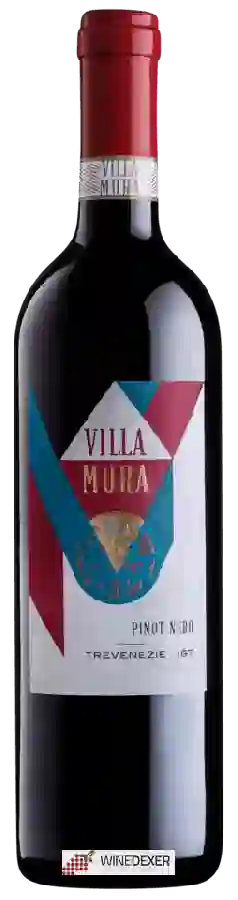
Winery Villa MuraPinot Nero
 Red wine


In the mouth this red wine is a with a nice freshness.
This wine generally goes well with poultry, beef or veal.
Taste structure of the Pinot Nero from the Winery Villa Mura
Light | Bold | |
Smooth | Tannic | |
Dry | Sweet | |
Soft | Acidic |
In the mouth the Pinot Nero of Winery Villa Mura in the region of Trevenezie is a with a nice freshness.
Food and wine pairings with Pinot Nero
Pairings that work perfectly with Pinot Nero



Original food and wine pairings with Pinot Nero

The Pinot Nero of Winery Villa Mura matches generally quite well with dishes of beef, veal or game (deer, venison) such as recipes of cabri en colombo with creole sauce, braised veal heart with carrots or duck with orange.
Details and technical informations about Winery Villa Mura's Pinot Nero.
Discover the grape variety: Terrano
This is a very old grape variety cultivated in particular in the Istria region of Croatia, Slovenia and Italy. It can also be found in the Republic of Macedonia. In France it is almost unknown. It should not be confused with refosco dal peduncolo rosso, it looks somewhat like it, especially since its synonyms are refosco del Carso or refosco d' Istria.
Last vintages of this wine

The best vintages of Pinot Nero from Winery Villa Mura are 2012, 0
Informations about the Winery Villa Mura
The Winery Villa Mura is one of of the world's great estates. It offers 19 wines for sale in the of Trevenezie to come and discover on site or to buy online.

The wine region of Trevenezie
Delle Venezie, is one of Italy's best-known wine appellations, made famous by the huge quantities of crisp, light Pinot Grigio delle Venezie shipped to the UK and US from northeastern Italy each year. In 2017, the name was transferred to a New DOC in the same area, and the IGT changed its name to Trevenezie. The former IGT delle Venezie white wines could very well end up in either appellation. The grape varieties used or the style of wine may dictate how the wines will be labeled from 2017.
The word of the wine: Chaptalization
The addition of sugar at the time of fermentation of the must, an ancient practice, but theorized by Jean-Antoine Chaptal at the dawn of the 19th century. The sugar is transformed into alcohol and allows the natural degree of the wine to be raised in a weak or cold year, or - more questionably - when the winegrower has a harvest that is too large to obtain good maturity.