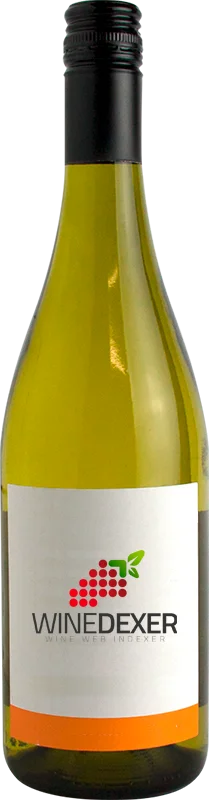
Winery VilágiCserszegi Fűszeres
 White wine


This wine generally goes well with
Details and technical informations about Winery Világi's Cserszegi Fűszeres.
Discover the grape variety: Claverie
Claverie blanc is a grape variety that originated in France (South-West). It produces a variety of grape specially used for wine making. It is rare to find this grape to eat on our tables. This variety of grape is characterized by large bunches and large grapes. Claverie blanc can be found cultivated in these vineyards: South West, Cognac, Bordeaux, Provence & Corsica, Rhone Valley, Armagnac.
Last vintages of this wine
The best vintages of Cserszegi Fűszeres from Winery Világi are 2018, 0
Informations about the Winery Világi
The Winery Világi is one of of the world's greatest estates. It offers 15 wines for sale in the of Slovakia to come and discover on site or to buy online.

The wine region of Slovakia
Slovakia (officially The Slovak Republic) is a landlocked country described as being either at the eastern edge of Western Europe, or the western edge of Eastern Europe. This dichotomy reflects the state's recent history, a story of political unrest common in this region. The lands that are now Slovakia were an integral Part of Hungary for almost 900 years, but became independent when the Austro-Hungarian Empire was dismantled after the First World War. Almost immediately, Slovakia aligned itself with Bohemia and Moravia (the modern-day Czech Republic), Silesia and Carpathian Ruthenia to form Czechoslovakia.
The word of the wine: Sulphur
An antiseptic and antioxidant substance known since antiquity, probably already used by the Romans. But it was only in modern times that its use was rediscovered. It will allow a better conservation of the wine and thus favour its export. Sulphur also gave the 18th century winegrower the possibility of extending the maceration period without fearing that the wine would turn sour and thus go from dark rosé wines to the red wines of today. Excessive sulphur, on the other hand, kills happiness, paralysing the aromas and causing headaches.