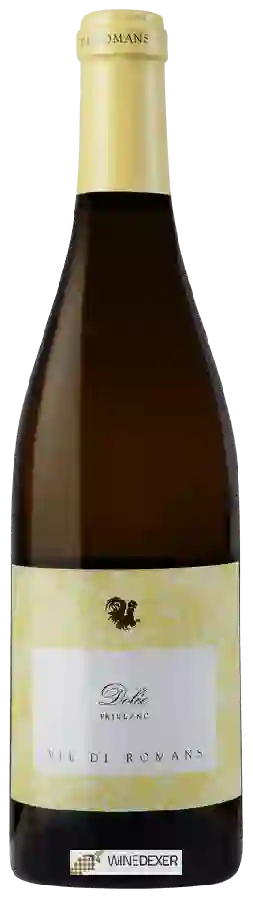
Winery Vie di RomansDolée
 White wine


In the mouth this white wine is a powerful with a nice freshness.
This wine generally goes well with lean fish, shellfish or mature and hard cheese.
Taste structure of the Dolée from the Winery Vie di Romans
Light | Bold | |
Dry | Sweet | |
Soft | Acidic |
In the mouth the Dolée of Winery Vie di Romans in the region of Friuli-Venezia Giulia is a powerful with a nice freshness.
Wine flavors and olphactive analysis






On the nose the Dolée of Winery Vie di Romans in the region of Friuli-Venezia Giulia often reveals types of flavors of non oak, earth or microbio and sometimes also flavors of vegetal, oak or tree fruit.
Food and wine pairings with Dolée
Pairings that work perfectly with Dolée



Original food and wine pairings with Dolée


The Dolée of Winery Vie di Romans matches generally quite well with dishes of pasta, shellfish or mature and hard cheese such as recipes of vegetarian lasagna, pasta with scampi or cannelloni with zucchini.
Details and technical informations about Winery Vie di Romans's Dolée.
Discover the grape variety: Verdelho rouge
Last vintages of this wine
The best vintages of Dolée from Winery Vie di Romans are 2018, 2017, 2008, 2007 and 2013.
Informations about the Winery Vie di Romans
The Winery Vie di Romans is one of of the world's greatest estates. It offers 23 wines for sale in the of Friuli Isonzo to come and discover on site or to buy online.

The wine region of Friuli Isonzo
DOC of Friuli-Venezia Giulia on the alluvial terraces of the Isonzo, star of Italian whites. Signature Sauvignon: pure and taut with notes of grapefruit, lime, boxwood, fresh herbs, white flowers and a mineral touch, crystalline palate — transalpine benchmark. Pinot Grigio ramato, full Friulano (almond), saline Ribolla Gialla, opulent Chardonnay. Supple Merlot, peppery Refosco reds.
The wine region of Friuli-Venezia Giulia
Italian benchmark of great whites of elegance and minerality. Emblematic Friulano with notes of fresh almond, pear and white flowers, taut Ribolla Gialla, precise Pinot Grigio, lively Sauvignon and balanced Chardonnay. Rare sweet Picolit (DOCG), saline Malvasia Istriana. Rising reds: fruity spicy Refosco, more tannic Pignolo and Schioppettino.
The word of the wine: VDN
Natural sweet wine. Wine obtained by mutage of the must during fermentation by adding over-finished alcohol at 96 °, produced in the vineyards of Roussillon, Languedoc, Rhone Valley and Corsica.